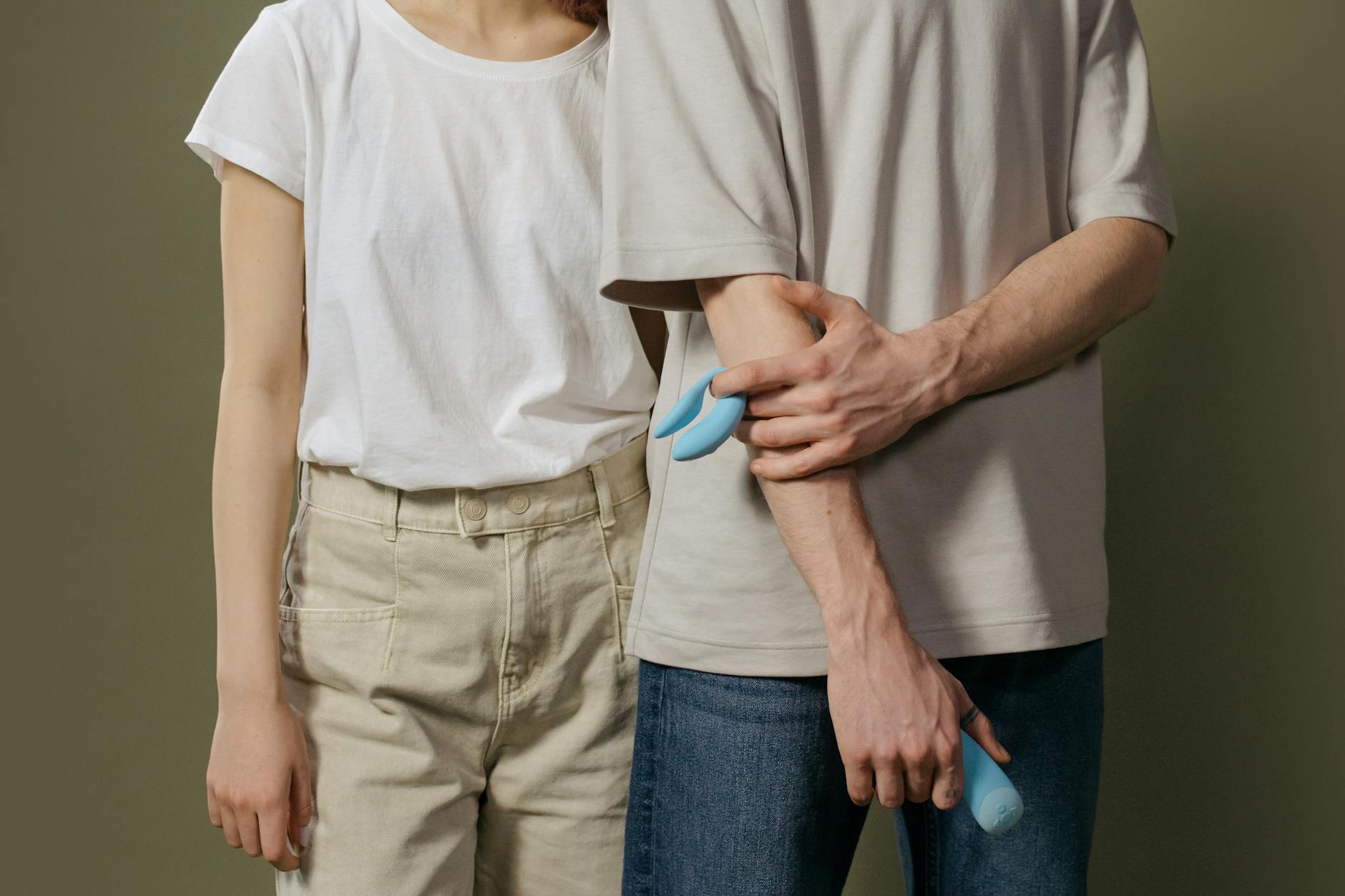
How to Use Lemon Vibrators During Perimenopause When Arousal Feels Inconsistent
Let's be real: perimenopause is the phase nobody warns you about because it's too messy to fit into a neat category. You're not in menopause yet, but you're also not in your regular cycle anymore either. Your body is cycling through hormone levels that shift week to week, sometimes day to day. One morning you wake up buzzing with energy and desire. Three days later, you couldn't care less if sex never happened again.
This inconsistency isn't broken. It's actually what perimenopause looks like. And it changes everything about how pleasure works.
Here's the thing nobody tells you: this phase is actually the perfect time to get familiar with a lemon vibrator or another clitoral vibrator, because your body needs support that's flexible enough to meet you wherever you are.
Why perimenopause messes with arousal timing
During your reproductive years, your cycle followed a script. Follicle-stimulating hormone (FSH) rose, estrogen climbed, progesterone dropped. You knew roughly when you'd feel desire, when you'd feel touch-averse, when your tissues would be more or less receptive. Your body had rhythm.
Perimenopause erases that script. FSH starts climbing unpredictably, trying harder and harder to trigger ovulation as your ovaries begin stepping back. Estrogen spikes, then crashes, then spikes again. Progesterone becomes erratic. Some months your cycle is normal. Other months it's 45 days long. Or 20 days. Or you skip a month entirely and then surprise yourself with one you weren't expecting.
Your brain notices these swings even when you don't. That inconsistency in hormone signaling means your arousal system gets mixed messages. Desire might feel sharp and urgent one week, then flat and distant the next. You might start to get aroused and then feel it just... switch off mid-experience. That's not loss of capacity. That's a nervous system responding to biochemical noise.
It's genuinely disorienting. And it's also exactly when a lemon vibrator becomes less of a luxury and more of a practical tool.
The advantage of air-suction stimulation during hormone flux
A lemon clitoral vibrator works differently than a traditional vibrator. Instead of relying purely on vibration frequency to build arousal, lemon adult toys use suction and gentle pulsing to stimulate the thousands of nerve endings in and around the clitoris. This distinction matters during perimenopause because your nervous system is already running on unstable current.
When hormones are erratic, direct vibration can feel overstimulating to some tissues and underwhelming to others on the same day. Suction-based stimulation from a lem vibrator creates a different kind of sensation. It's gentler on nerve endings while still being intense enough to trigger response even when your arousal is running slow. You can start at pattern one and spend time there, letting the sensation build gradually instead of forcing intensity.
The nice side effect: you're working with your nervous system instead of against it. Suction feels more adaptive to fluctuating hormone levels than pure vibration does.
Timing: the perimenopause factor
Here's something I tell clients during the perimenopause years: forget trying to time sex or self-pleasure around your cycle the way you used to. Your cycle is unreliable right now, and fighting that creates needless frustration.
Instead, use your lemon sexual toy based on how you're feeling in your body right now, not in your calendar. On days when arousal feels distant, the lemon suction toy gives you a pathway in without requiring you to manufacture desire from nothing. You're not forcing it. You're just making entry easier.
On days when arousal feels sharp and accessible, you might find that a lemon clitoral vibrator amplifies what's already there more efficiently than manual touch does. The intensity is adjustable (most Hello Nancy tools have several pattern levels), so you're not stuck with one speed.
The permission-giving part is important: you don't have to wait for the "right" time in your cycle. You explore whenever your body gives you a signal, even if that signal is just curiosity instead of full desire.
Temperature and lubrication shifts matter more now
During perimenopause, estrogen's effect on vaginal and vulvar tissue becomes less consistent. Some days tissues feel normal and naturally lubricated. Other days they feel drier, more delicate. This is when lemon vibrators become especially practical because they don't require the same level of natural lubrication that penetrative sex does.
That said, even clitoral stimulation benefits from lubrication during this phase. Water-based lube becomes your friend, not because you're broken, but because your tissue thickness is shifting. A water-based lubricant (not silicone, which can damage silicone toys) reduces friction and makes sensation feel more pleasurable rather than irritating.
Some perimenopause clients also report that external tissue is more temperature-sensitive during this phase. Starting with your lemon toy at room temperature and then using it feels different than one that's been sitting in a warm room. You might need to warm it gently under warm water first, or you might prefer it cool. The point is that small adjustments matter more during these years.
Starting with lower patterns when arousal is uncertain
One mistake I see is people assuming they need to jump to the highest intensity setting when arousal feels slow. The logic makes sense: if arousal isn't building, amp it up. But during perimenopause, this often backfires.
When your arousal system is already confused by hormone fluctuation, starting intense can feel like overstimulation to tissue that's already on edge. It's like turning the volume up too fast on a speaker that's already crackling with static.
With a lemon clitoral vibrator, start at pattern one or two. Spend real time there, five to ten minutes. Your nervous system might need that runway to recognize what's happening and coordinate a response. Once you feel arousal building, then increase if you want to. You might find that staying with lower intensity for the full experience actually delivers better sensations than racing to intensity.
This also matters for tissue sensitivity. Perimenopause sometimes brings temporary nerve sensitivity changes. Starting lower protects against overstimulation while still giving you the access to pleasure you deserve.
What happens when arousal switches off mid-experience
One of the more frustrating perimenopause phenomena is when you're in the middle of pleasure and suddenly feel it just... stop. Arousal flatlines. Sensation goes numb. This used to freak out my clients until we normalized it: this is a hormone-level event, not a pleasure failure.
When this happens with a lemon vibrator, you have two smart options. First, you can pause and breathe. Really breathe. Sometimes arousal needs a reset moment, not more stimulation. A minute of breathing and noticing can restart the signal.
Second, you can shift patterns. Sometimes the nervous system just needs a different sensory input. If you're on pattern three and flatline hits, try pattern two or switch back to one. The change itself can restart arousal momentum. This is where having multiple patterns on your Hello Nancy toy becomes genuinely useful, not just a luxury.
If arousal keeps switching off after several attempts, that's also fine. You stopped when your body said stop. You still experienced pleasure. You built a map of what works. You try again next time.
Managing expectations around orgasm during this phase
Here's what I wish someone had told me during perimenopause: your orgasm might take longer right now. That's not a permanent feature. That's a perimenopause feature.
When hormones are chaotic, the neural pathway to orgasm sometimes gets noisier. It takes longer to build, feels less predictable, or requires more sustained attention. A lemon suction vibrator actually helps with this because suction stimulation tends to build arousal more gradually than rapid vibration does, and gradual building often works better during these years.
It helps to separate the goal from the experience. If you go into using your lemon clitoral vibrator with the goal of orgasm, and your body takes 20 minutes or decides not to, you'll feel like you failed. If you go in with the goal of pleasure and sensation, then the orgasm becomes a bonus, not a requirement.
Most clients I work with find that once they released the pressure to perform, orgasms actually became more accessible because their nervous system wasn't in a constant state of trying.
Communication with partners during perimenopause arousal shifts
If you share pleasure with a partner, the inconsistency of perimenopause can create weird friction. Your partner might feel rejected if you're not interested when they are. You might feel pressure to be interested on a schedule that no longer matches your body.
This is actually the right time to introduce or reintroduce a lemon vibrator into partnered pleasure. Here's why: it gives you both an external tool that takes some pressure off the dynamic. Your partner isn't the sole source of stimulation. The lemon sexual toy is. You're exploring something together instead of one person trying to deliver and the other person trying to accommodate.
The conversation is simpler too: you're not saying "I'm not attracted to you" or "Your touch doesn't work anymore." You're saying "My arousal system is in flux right now, and this tool helps me stay connected to pleasure. Want to explore it together?"
That usually softens the whole thing because you're framing it as a tool for reconnection, not a sign that the relationship is broken.
Consistency matters, but not the way you think
One thing that surprises clients: using your lemon vibrator regularly during perimenopause actually helps normalize your nervous system's response over time. Not by regulating hormones (they're going to do what they're going to do), but by giving your arousal system repeated safe opportunities to respond.
When you explore pleasure weekly using a lem vibrator, even on days when arousal feels low, you're sending a message to your nervous system: "Pleasure is safe. Pleasure is accessible. We keep showing up for it." That consistency builds a kind of resilience to the hormone chaos. It doesn't eliminate the chaos. It helps your nervous system get quieter despite it.
I recommend clients aim for something like once or twice a week, not as a performance requirement, but as a kind of nervous system investment.
When to see a doctor about arousal changes
There's a line between "my arousal is inconsistent because my hormones are in flux" and "I'm experiencing other symptoms that suggest I should get checked out." If you're also having sleep disruption, significant mood shifts, or if the arousal flatline is accompanied by pain, that's worth mentioning to a doctor.
Sometimes what feels like arousal inconsistency is actually thyroid-related, or it's a sign of depression starting, or it's something fixable that a provider could help with. You don't have to white-knuckle through perimenopause without support.
A good doctor (ideally one trained in perimenopause specifically) can help you figure out whether hormone fluctuation alone is causing the shift, or whether there's something else worth addressing alongside it.
The bigger picture: this phase is temporary
I want to be clear about this because it matters: perimenopause arousal inconsistency is not forever. It's usually three to ten years, depending on your body. That feels like forever when you're in it, but it's not. Your nervous system will adapt. You'll find patterns that work. And then one day, you'll cross into menopause and a different kind of consistency emerges.
Right now, the job is to stay curious instead of frustrated. A lemon clitoral vibrator is a tool for that curiosity. It lets you keep exploring pleasure even while your body is in transition. It doesn't require your arousal to be predictable or intense. It just asks you to show up.
That's worth the effort.
FAQ: Lemon Vibrators During Perimenopause
How often should I use a lemon vibrator during perimenopause?
There's no magic number, but I recommend thinking about it like exercise for your nervous system. Once or twice a week gives your arousal pathways regular activation without creating pressure. Some weeks you'll feel like exploring more. Other weeks less. Honor what your body needs that week. The consistency matters more than the frequency.
Can using a lemon vibrator make perimenopause symptoms worse?
No. In fact, the opposite is often true. Regular sexual pleasure and self-pleasure actually helps with mood, sleep, and stress during perimenopause. A lemon clitoral vibrator, because it's adaptable to fluctuating arousal, makes it easier to stay connected to pleasure even when your body feels chaotic. The suction stimulation is gentler on sensitive tissue than some alternatives too.
What if my lemon vibrator feels too intense during low-arousal days?
Start at the lowest pattern and give yourself permission to stay there for the entire experience. You don't have to progress to higher intensity. Some clients find that pattern one on a low-arousal day delivers exactly the sensation they need without overstimulation. If you want variety, you can experiment with switching patterns mid-experience, but there's no rule that says you have to reach the highest setting.
Should I use lubrication with a lemon suction vibrator even if I feel naturally lubricated?
It depends on how your tissue feels that day. During perimenopause, the consistency of natural lubrication changes. Some days it's abundant. Other days tissue is drier despite being aroused. A water-based lubricant is never a bad idea because it reduces friction and usually makes sensation feel better. It's not about being broken. It's about optimizing comfort during a phase when your body is in flux.
Can I use my lemon vibrator if I'm having hot flashes?
Absolutely. Some clients actually use their lemon toys during hot flashes as a grounding tool because the sensation gives their nervous system something to focus on besides the discomfort. Other clients prefer to wait until after a hot flash passes. Both are fine. Your body will tell you what feels right. The nice thing about having a tool is you get to choose based on how you're feeling in that moment.
How do I talk to my partner about using a lemon vibrator when my arousal has become unpredictable?
Start with honesty about what's happening: "My arousal feels inconsistent right now because of perimenopause. I want to explore tools that help me stay connected to pleasure even on days when my body feels off. I'd love your support with this." Frame it as something you're navigating together, not something you need to do alone. Most partners are relieved to have a concrete tool instead of guessing what will help.
Ready to explore? Start with a lemon vibrator at pattern one and give yourself permission to spend time there. Your nervous system will tell you what's next. For more specific guidance on perimenopause transitions, reach out to us at /contact to connect with a Hello Nancy team member who can help you find the right tool for your body right now.