Here's what's actually happening in your body
Two weeks before your period starts, your clitoris becomes more sensitive. Not because you're imagining it. Not because you're overthinking it. It's real physiology. Progesterone surges during the luteal phase (the second half of your cycle), and along with it comes increased blood flow, thinner tissue, and heightened nerve responsiveness in the genitals. Your clitoris doesn't just feel different. It literally is different.
This is useful information. Most people with cycles never connect the dots between their pleasure timeline and their hormonal timeline. So when the same vibration pattern that felt perfect last week suddenly feels intense, sharp, or even uncomfortable, the assumption is that something is wrong. Nothing is wrong. Everything is working exactly as designed.
Why the luteal phase changes what feels good
Three hormonal shifts happen in the two weeks leading up to your period.
First, progesterone climbs. This hormone increases sensitivity throughout your pelvic floor and genital tissue. Your clitoris has thousands of nerve endings, and higher progesterone essentially turns up the volume on those nerves.
Second, estrogen also fluctuates during this phase. The ratio between estrogen and progesterone shifts, which changes blood flow distribution. More blood in the tissues means more engorgement, which can make direct pressure feel more intense.
Third, your pelvic floor muscles naturally tense slightly during the luteal phase. This isn't voluntary. It's part of the hormonal cascade. When your pelvic floor is contracted, stimulation to the clitoris transmits differently. It can feel sharper, less diffuse.
The result: what felt like a comfortable medium intensity on day 7 of your cycle might feel too strong on day 21. And what felt too gentle last week might feel perfect now.
The signals your body is sending
Before you reach for your lemon vibrator, tune into what your clitoris is actually telling you. Pain is different from intensity, and recognizing the difference is the whole game here.
Sharpness or rawness usually means you're hitting directly against thinner, more engorged tissue. Discomfort that radiates outward suggests pelvic floor tension. A buzzing sensation that feels almost electric can indicate overstimulation of the nerve endings.
On the flip side, increased pleasure without pain is just heightened sensitivity in its best form. Some people describe the luteal phase as having a "deeper" orgasm capacity. Others say sensations feel fuller, richer, more immersive. The difference between peak pleasure and discomfort during this phase is often just a small shift in technique.

Photo by cottonbro studio on Pexels
How to adjust your lemon vibrator technique
You don't need to stop using your lemon vibrator during the luteal phase. You just need to meet your clitoris where it is. Here's what actually works.
Lower the intensity, don't abandon it. If you usually use your vibrator at pattern 4 or 5, dial back to pattern 2 or 3 during the luteal phase. The suction mechanism on a lemon clitoral vibrator is gentler than direct vibration, which makes it particularly good for heightened sensitivity, but the intensity settings still matter. Lower settings give you the same suction rhythm with less aggressive force.
Create distance with your hand or toy position. Instead of pressing your clitoris directly against the lemon vibrator cup, try positioning it just slightly away from direct contact. The stimulation still reaches your clitoris through the surrounding tissue, but it feels less sharp. You can also hold your vibrator at a slight angle rather than perpendicular. This distributes the sensation more broadly.
Extend your warm-up time. Your clitoris may feel sensitive immediately, but that doesn't mean it's ready for sustained stimulation right away. Spend 10-15 minutes with lower intensity or indirect touch before moving to direct contact. Let your body acclimate gradually. This actually tends to produce deeper orgasms during the luteal phase.
Use more lubrication. Even though progesterone increases blood flow, not everyone produces more natural lubrication during the luteal phase. Some people produce less. A good water-based lubricant buffers direct contact and makes suction feel smoother, less grabby. It also signals to your body that things are safe, which can help relax pelvic floor tension.
Layer stimulation instead of amplifying it. Rather than turning up the intensity, add a second point of contact. Use your lemon vibrator on your clitoris while gently touching your labia, your perineum, or your inner thighs. This distributes intensity across a wider area and often feels more satisfying than one intense point. Layered stimulation also tends to trigger fuller, more expansive orgasms.
When intensity is actually what you want
Here's the thing though: some people genuinely love heightened sensitivity during the luteal phase and want to lean into intensity, not pull back from it.
If that's you, go for it. There's no rule that says you have to dial down just because your tissues are more sensitive. Some bodies produce deeper, more powerful orgasms with heightened sensitivity. The key is making sure you're choosing intensity intentionally, not accidentally triggering overstimulation because you didn't adjust for the phase you're in.
If you want to go harder during this phase, start at a moderate intensity and build up gradually. Check in with yourself every few minutes. Notice whether sensations feel good-intense or uncomfortable-intense. Those are different things, and only your body knows the difference.
What to do if you push too hard
Sometimes you miscalculate. You use your lemon vibrator at an intensity that feels sharp or raw, and now your clitoris feels sore or oversensitized.
First, stop immediately. Continuing through discomfort doesn't build tolerance. It just creates negative associations with the sensation.
Second, take a break. A few hours, or until the next day, is usually enough. Your clitoral tissue will recover quickly.
Third, next time, start at a lower intensity than you think you need. You can always turn it up. You can't un-ring that bell if you went too hard.
If soreness lasts more than a day, or if you're experiencing pain during other parts of your cycle, mention it to a gynecologist. Persistent clitoral tenderness can sometimes signal a treatable condition, and it's worth ruling out.
The bigger picture: cycle syncing your pleasure
Most people with cycles don't think about adjusting their sexual techniques across the month. We're taught that pleasure should be consistent, available, the same all the time. Real bodies don't work that way.
Follicular phase (first half of cycle): higher estrogen, more lubrication, clitoris feels less sensitive. This is often when people want more intensity, longer sessions, direct contact.
Luteal phase (second half of cycle): progesterone dominates, heightened sensitivity, deeper orgasm potential. This is when subtlety often beats intensity.
If your sensitivity shifts drastically across your cycle, that's not a bug. It's the design of the system. The more you pay attention to these shifts, the better you can tailor your approach.
Your lemon vibrator becomes even more useful when you understand how your body changes. A tool that adapts across different intensities and patterns is exactly what you need when your body's preferences shift monthly.
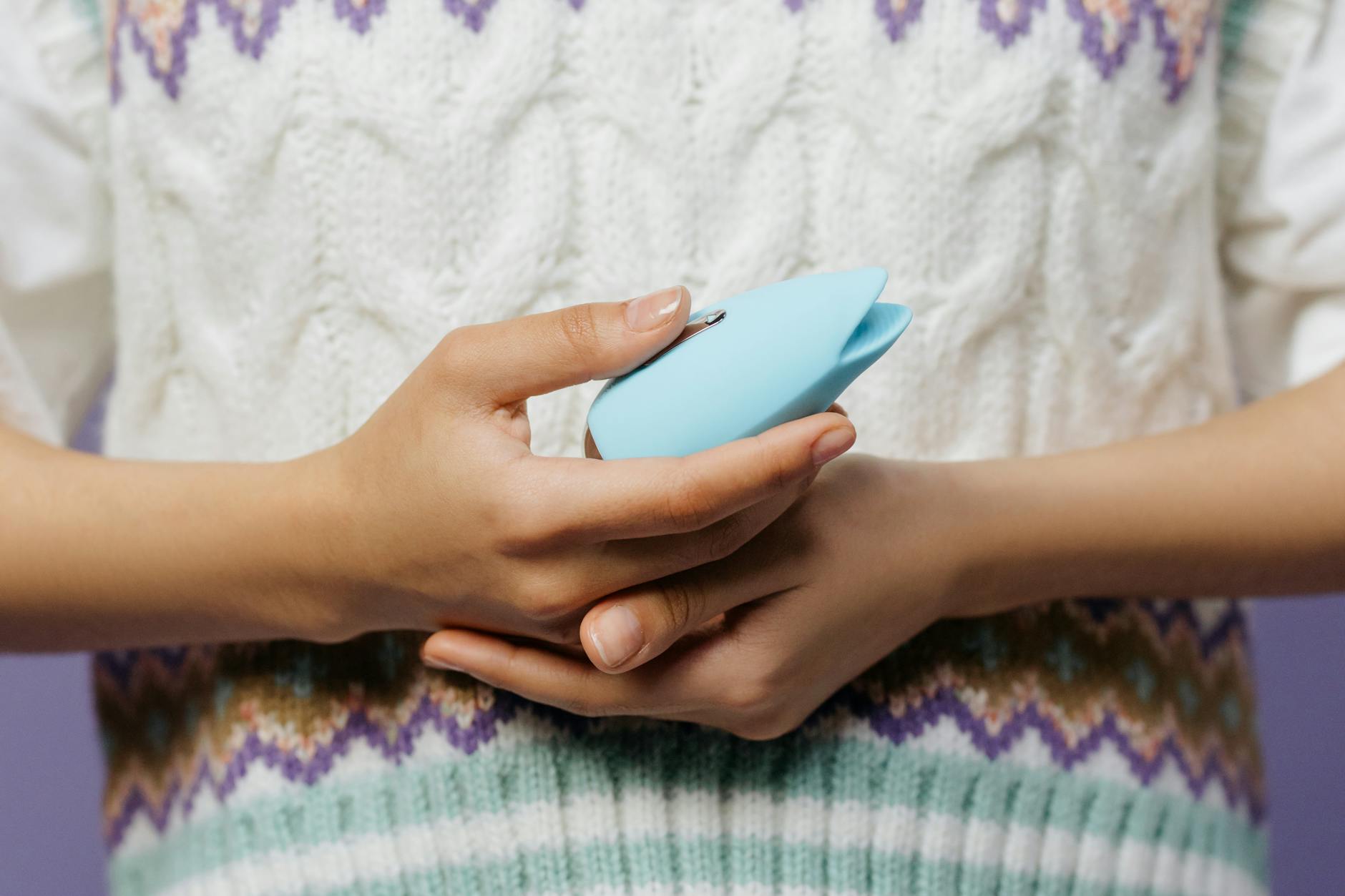
Photo by cottonbro studio on Pexels
FAQ: Clitoral sensitivity and your cycle
How early before your period does clitoral sensitivity increase?
Usually around 7-10 days before menstruation, so roughly the second half of the luteal phase. But cycle length varies wildly, and so does hormone sensitivity. Some people notice changes starting at day 14 of a 28-day cycle. Others don't feel a shift until days 20-21. Track your own cycle for two or three months and see when your personal sensitivity peak lands. That data is way more useful than any general timeline.
Can you use a lemon sucker during your period itself?
Absolutely. Hormones actually drop during menstruation, so your clitoris usually returns to its follicular-phase sensitivity. Many people find that orgasms during their period feel incredibly satisfying, partly because the pelvic floor is naturally more relaxed. Some people experience cramping relief from orgasm. If you want to use your lemon vibrator during your period, there's no medical reason not to. Just make sure you're using a menstrual disc, cup, or other period product that creates a secure seal if you're concerned about mess.
Is heightened clitoral sensitivity during the luteal phase normal?
Completely normal. It's such a common experience that it's documented across multiple studies on hormonal cycles and genital sensitivity. If you're not experiencing it, that's also normal. People's hormone sensitivity varies. Some people have dramatic monthly shifts. Others barely notice a difference. Neither is "wrong."
Does birth control change when your clitoris feels most sensitive?
Yes, significantly. Hormonal birth control (pill, patch, ring, shot) artificially regulates hormone levels, so the natural sensitivity fluctuation often flattens out. Some people on hormonal birth control report no monthly sensitivity changes at all. Others still notice subtle shifts. The copper IUD doesn't affect hormones, so cycle-based sensitivity changes are still there. If you switch birth control methods, expect your pleasure preferences to shift too.
Should you avoid using a lemon vibrator when you're extra sensitive?
Not at all. You should adjust how you use it, but avoiding stimulation entirely is unnecessary. The lemon vibrator's suction mechanism is actually gentler than many other vibrator styles, which makes it particularly good for phases when your clitoris needs more care. Just use lower intensities and techniques that feel good for heightened sensitivity.
What if your sensitivity doesn't return to normal after your period?
If heightened clitoral sensitivity persists beyond day 5-7 of your cycle (when you're in the follicular phase and hormones should be lower), check a few things. Are you stressed? Stress hormones can mimic luteal-phase effects. Are you on a new medication? Some antidepressants and antihistamines affect genital sensitivity. Have you had any recent irritation or infection? If nothing obvious explains it, and it's been going on for more than a cycle or two, talk to a gynecologist. Persistent sensitivity changes can indicate hormonal imbalances or other treatable conditions.
The takeaway
Your body isn't broken. Your clitoris isn't too sensitive. You're just living with a system that changes throughout the month, and that's actually valuable information. Once you understand when and why your sensitivity shifts, you can stop fighting it and start using it. Your lemon vibrator isn't a one-setting tool. It's a partner that works with your body across its natural variations, and the more intentional you are about those variations, the better your pleasure becomes.