
Here's the thing nobody says out loud
Penetration is not the same as orgasm for most people with vulvas. The data backs this up. Between 70 and 80 percent of people with vulvas need clitoral stimulation to reach orgasm, and that number doesn't move much regardless of age, relationship status, or how long you've been with a partner. Yet the cultural script still frames penetration as the main event. Everything else becomes the opening act.
That disconnect between what's supposed to feel good and what actually does is exactly where lemon vibrators become useful. They're not a workaround or a consolation prize. They're the direct line to what's been missing.
Why penetration and pleasure aren't the same conversation
Your clitoris is where the nerve endings live. That's not poetry. That's anatomy. When penetration happens, the internal parts of your clitoris do experience some indirect stimulation through pressure and movement, but it's not the same as direct contact with the external parts where most of the sensation lives.
Add into that: penetration, especially with a partner, often comes with performance pressure. Are they comfortable? Are you? Is it lasting the "right" amount of time? That mental load alone kills arousal for a lot of people. And when arousal drops, sensation dampens. Pleasure gets quieter.
Here's what changes when you add a lemon vibrator to the mix. You're not replacing penetration. You're running pleasure on two tracks at once. One for the sensation happening inside, one for where the nerve endings actually are.
The setup that actually works
This is where technique and positioning matter. If you're with a partner, the easiest positions for incorporating a lemon clitoral vibrator are ones where your hand (or theirs) stays free and accessible. Facing each other, lying on your side, seated positions where penetration isn't the only thing happening. Think less choreography, more logistics.
Start the vibrator first, before penetration. Get aroused on your own terms. Build sensation at your own pace. Once you're already feeling it, penetration adds a new layer instead of being the thing you're waiting to get turned on by. The order matters more than you'd think.
If solo play is your angle, the freedom is simpler. You can use a lemon vibrator exactly how it feels best. You can hover, press, move in circles, switch patterns. You're not managing anyone else's experience. That's radically freeing for a lot of people who've spent years calibrating pleasure around a partner's rhythm instead of their own.
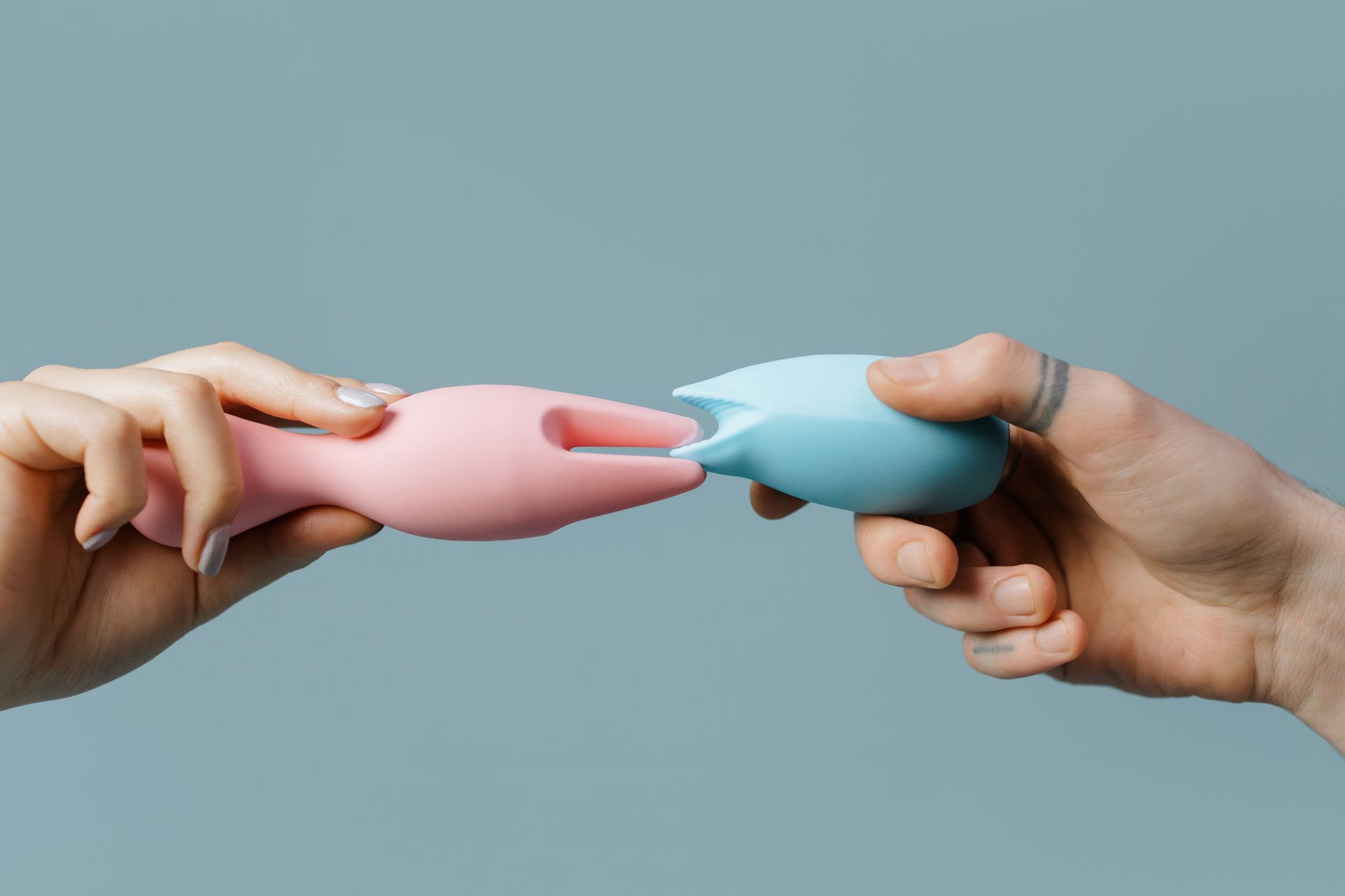
Photo by cottonbro studio on Pexels
The intensity question
Lemon vibrators, especially the Lem vibrator, come with multiple patterns and intensity levels. That's not a feature you have to turn on all at once. Most people find that starting at pattern 1 or 2, low intensity, is where the good stuff lives. Not because you can't "handle" more, but because sustained pleasure at medium intensity often builds better than jumping straight to the highest setting.
Think of it like the difference between a consistent hum and a jolt. The hum builds sensation over time. The jolt is exciting but flattens quickly. If you're trying to stay connected to penetration while using a lemon clitoral vibrator, consistency wins over intensity.
If you're with a partner and worried about them thinking the vibrator means something's wrong, let me be direct. It doesn't. It means you know what you need. That's actually attractive. Partners who care about your pleasure want this information. It makes them better lovers.
The communication thing
If penetration with a partner currently happens without clitoral stimulation and you want to change that, say it directly. Not during sex. Before. Try something like: "I want to feel more pleasure when we're together, and I know what helps. Can we try this?"
Then show them. Hand them the vibrator. Let them see how you use it. Let them be part of it if they want to be. Some people love holding the vibrator while their partner is inside them. Some people prefer to control it themselves. Both are fine. The conversation is where the real pleasure starts.
When you've been disconnected from your own pleasure for a while, this can feel awkward or demanding. It's not. Your body deserves sensation. Your partner deserves to know how to give it to you. That's not selfish. That's honest.
Timing and the arousal rebuild
Here's something I've noticed with a lot of clients. People who've spent years having penetrative sex without orgasm sometimes need to rebuild their sense of what they're actually capable of. Not because something's broken. Because the neural pathways for pleasure get quieter when they're never activated.
Lemon vibrators wake that back up. You might find that your first few times using one, the sensation is almost unfamiliar. You might need to slow down and actually feel it instead of waiting for it to happen. Give yourself that time. Arousal is a skill. It gets better the more you practice it on your own terms.
If you're doing this solo first, that's smart. You learn what your body responds to. You learn your own rhythm. Then when you bring that knowledge into partnered sex, you're not figuring it out in real time while managing someone else's experience.
The long-term shift
After a while, something shifts. You stop framing clitoral stimulation as the thing that has to happen alongside penetration. It just becomes part of how sex happens. The way your body connects to pleasure gets richer. Less compartmentalized. More like how pleasure actually works.
Some people find that once they've experienced what real orgasm from clitoral stimulation feels like, penetration becomes optional rather than mandatory. Others find they want both, just not in the order they thought. Some discover they want neither and find other ways to connect with partners. All of that's valid. The point is knowing your own answer instead of following a script.
Lemon vibrators, whether solo or partnered, give you the data you need. They show you what your body is actually wired for. Then you get to decide what to do with that information.
When to escalate or recalibrate
If you're using a lemon clitoral vibrator regularly and sensation starts to feel muted, take a break. A week or two away from any stimulation helps your nerve endings reset. That's not a sign something's wrong. That's just how sensitivity works. It's the same reason you taste less salt in a meal after eating salty food all week.
If nothing changes and pleasure still feels distant or disconnected, talk to a healthcare provider. Sometimes that disconnect is stress, sometimes it's medication, sometimes it's hormonal. A good clinician can help you figure out what's actually going on instead of you guessing.
The other thing to mention: lemon sexual toys need proper care. Wash them after every use with warm water and mild soap. Dry completely before storing. Keep them away from extreme heat. Treating them well keeps them functioning well, which means they keep working the way they're designed to.
The real thing that changes
When pleasure stops feeling like something that happens to you and starts feeling like something you actively choose and direct, sex becomes different. Easier. Hotter. More honest. That's not because lemon vibrators are magic. It's because you're finally on the same page as your own body.
Start there. Everything else follows.
People also ask
Can you use lemon vibrators with a partner during penetration?
Yes. Most positions that face each other or put you in control work well. Your hand, their hand, or a toy holder all get the job done. The key is making sure whoever's controlling the vibrator is comfortable and can focus on sensation instead of logistics. Talk through positioning first.
Do lemon vibrators replace penetration?
No. They add to it. Some people discover they prefer clitoral stimulation alone. Some want both. Some want neither. A lemon clitoral vibrator is a tool that helps you figure out what you actually want instead of what you think you're supposed to want.
What if I feel selfish asking for this during partnered sex?
You're not being selfish. Your pleasure matters. A partner worth staying with wants to know how to help. If they react badly to you asking for what feels good, that's information about them, not about you. Better partners actually feel relieved. It takes the guessing out.
How long does it take to orgasm with a lemon vibrator if I've never had one from clitoral stimulation?
It varies. Sometimes the first time. Sometimes it takes a few sessions of getting to know how your body responds. Longer warm-up time usually helps. Trying it when you're already aroused from other stimulation helps. Pressure and expectation work against you. Patience and curiosity work for you.
Is it normal for sensation to feel stronger on one side of the clitoris?
Completely. Your body is asymmetrical. One side might be more sensitive. One pattern might feel better than another. Explore that. There's no "correct" way your clitoris is supposed to respond. Only what actually works for your body.
What if my partner doesn't want to use lemon vibrators together?
That's information. Some people have hang-ups about vibrators. Sometimes talking helps. Sometimes it doesn't. You still get to use one solo. Your pleasure doesn't depend on their comfort. If the gap between what you need and what they're willing to do becomes too wide, that's a relationship conversation, not a toy conversation. Consider working with a couples therapist if this feels important enough to stay together over.
References
Baltimore, S., et al. (2018). "Orgasm in women with complete spinal cord injury." Sexual Medicine Reviews, 6(4), 570-580.
Brotto, L. A., & Smith, K. B. (2019). "Sexual desire and arousal disorders in women." The Journal of Sexual Medicine, 16(12), 1817-1832.
King, R., et al. (2021). "Female sexual dysfunction: A systematic review of epidemiology and risk factors, 1990-2021." Sexual Medicine Reviews, 9(2), 287-307.