
Let's name what you're actually experiencing
You're touching yourself and feeling nothing. Not numbness exactly. More like you're watching yourself from three feet away, going through the motions on someone else's body. Your mind is somewhere else, nowhere, everywhere. You finish because you know you're supposed to, but the pleasure never landed. This is dissociation during solo sex, and it's wildly common. You're not broken. You're not doing it wrong.
Dissociation during masturbation usually signals one of three things: chronic stress that's fractured your nervous system, a protective mechanism your body learned at some point, or simply spending so much time on your phone and in your head that presence has become a foreign language. Sometimes all three at once.
Why lemon vibrators actually help with this
Unlike internal vibrators or wand vibrators that can feel abstract if you're already checked out, lemon clitoral vibrators use suction and gentle pressure on the most sensation-rich nerve cluster on your body. The specificity of that focus is harder to dissociate from. Your clitoris isn't a metaphor. It has ten thousand nerve endings concentrated in a space the size of a pea. When a lemon vibrator like the Lem creates steady, localized stimulation, your brain has to pay attention or it literally won't feel it.
The second reason is pacing control. Dissociation thrives on autopilot. When you're using your hand or a traditional vibrator on a high setting, the rhythm can become repetitive and meditative in the worst way. You zone out. With a clitoral vibrator that has distinct patterns and adjustable intensity, you have to actively choose what comes next. That micro-decision loop keeps you tethered to the present moment.
Building back sensation from ground zero
Start slow. Genuinely slow. If you've been dissociating during solo sex for months or years, your nervous system has learned that arousal isn't safe or real. You're retraining it.
Begin with your vibrator off. Hold it. Feel the weight, the material, the temperature. This isn't wasting time. Your body needs to remember that touch starts before vibration. Spend a full five minutes just holding the vibrator against your inner thigh, your labia, your clitoris. Notice the texture. Notice what sensations appear without any power turned on.
Then start on the lowest setting. Not because you're numb and need to escalate. Because subtlety forces presence. A gentle suction or soft pulse requires you to lean in and pay attention. You can't zone out the way you do with intense vibration.
Move the vibrator slowly. Slow enough that you notice the difference between touching your inner labia and your outer labia. Slow enough that you feel where the sensation is brightest and where it fades. This is proprioceptive anchoring. You're teaching your nervous system that your genitals are part of you, not something happening to someone else.
Anchoring techniques that actually work
Three practices I recommend to every client rebuilding presence in solo sex:
Breath awareness. Before you touch yourself, spend one minute breathing with intention. Inhale through your nose for four counts. Hold for four. Exhale for six. This activates your parasympathetic nervous system and signals safety to your body. Then maintain this breathing during stimulation. If you notice your breath getting shallow or you're holding it, pause. Holding your breath is often what triggers dissociation in the first place. You tighten up to "perform" pleasure and your mind checks out.
Single focus anchor. Pick one physical sensation and return to it deliberately every 30 seconds. That sensation is your anchor. Could be the pressure of the lemon vibrator on your clitoris. Could be your other hand on your breast. Could be the feeling of the bed beneath you. When you notice your mind drifting, gently bring your attention back to that sensation without judgment. You're not failing if your mind wanders. You're succeeding every time you notice and return.
Temperature and texture shifts. If you're feeling numb, variety snaps you back into your body. Use your lemon vibrator for a minute, then switch to your hands or a different texture. Then back to the vibrator. These shifts create novelty, and novelty demands presence. Your brain can't dissociate when it's being surprised.
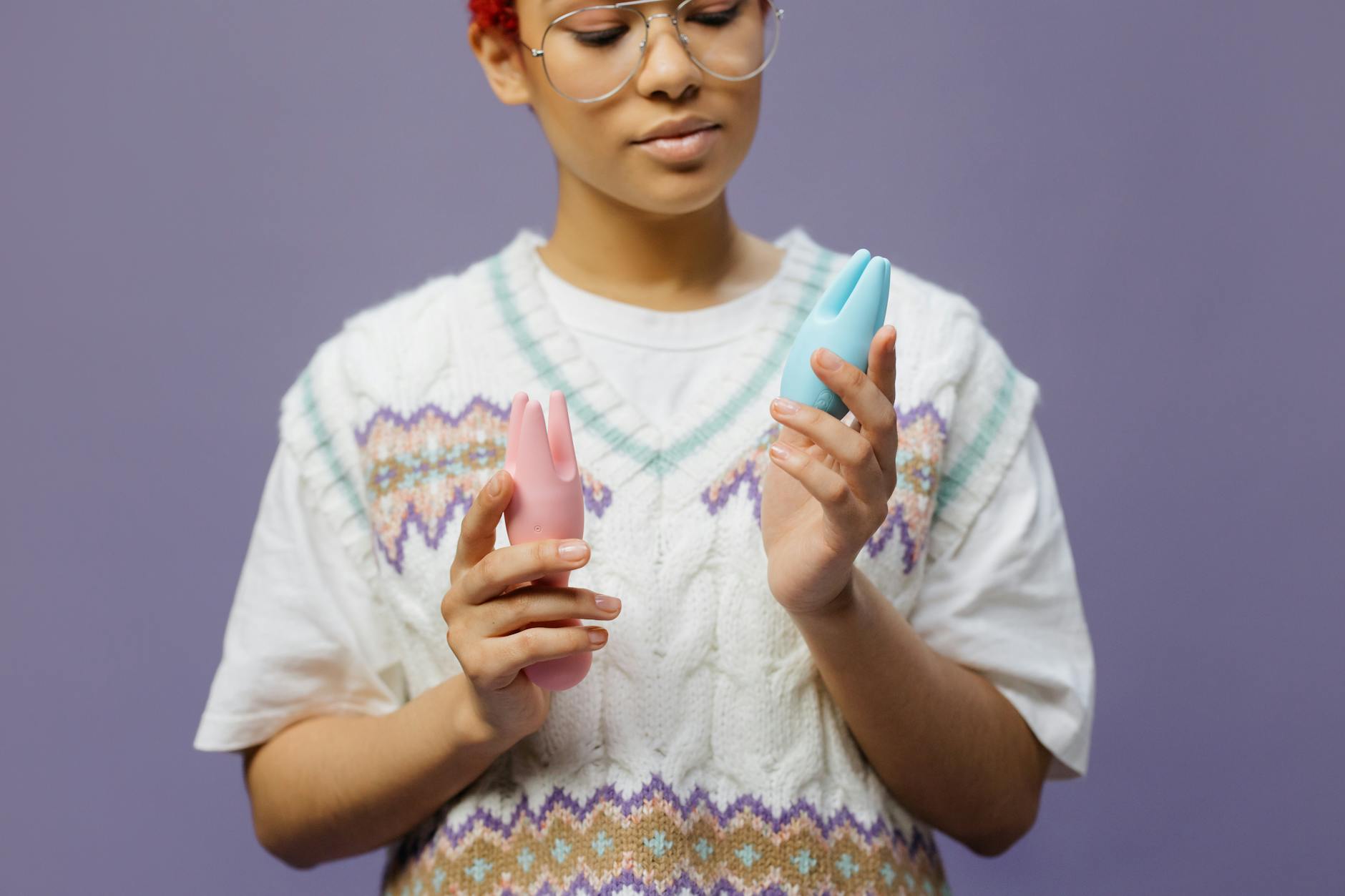
Photo by cottonbro studio on Pexels
The role of intentionality and self-compassion
Honestly, this is where most people miss the real work. Using a clitoral vibrator correctly when you're dissociated isn't just about technique. It's about deciding that your solo pleasure matters enough to be present for it.
That sounds simple. It's not. If you've spent years checking out during sex, whether solo or partnered, there's usually something underneath. Maybe you were taught that your desire is something to be ashamed of. Maybe sex became something you performed to keep someone else happy instead of something you claimed for yourself. Maybe you've been in survival mode for so long that your nervous system defaulted to "absence is safer."
Using your lemon vibrator as a presence practice means showing up even when it feels awkward. Especially when it feels awkward. The first time you stay fully present during solo sex, you might not orgasm. That's fine. The goal isn't climax right now. The goal is sensation. The goal is proving to your nervous system that your pleasure is worth your attention.
When dissociation is a symptom of something deeper
If you've experienced sexual trauma, dissociation during sex is a protective mechanism your body installed. It kept you safe once. It might still serve a purpose in certain contexts. Using a vibrator won't "fix" this, and it shouldn't be your only tool.
Work with a trauma-informed therapist or somatic practitioner alongside your self-pleasure practice. These aren't competing approaches. A vibrator is a way to practice presence in your body. Therapy is where you process why your nervous system learned to leave in the first place.
The same applies if dissociation is part of a larger mental health picture. Depression, anxiety disorders, PTSD, ADHD. All of these can fragment presence during intimacy. A lemon clitoral vibrator is genuinely useful. It's also not a substitute for medical care.
Rebuilding pleasure is patience work
You won't go from totally checked out to completely present in one session. Some days you'll get halfway through and notice you've been thinking about your grocery list. That's not failure. That's your nervous system learning that it's safe to stick around for pleasure. Every moment of actual presence, even for five seconds, is your body remembering that you belong in this experience.
The Lem and other lemon vibrators are designed to make presence easier. The focused stimulation, the control, the specificity. All of it serves one purpose: bringing you back into your body. But the vibrator is the tool. You're the one doing the real work. You're the one deciding that your pleasure is worth paying attention to.
That decision, made over and over, is what actually heals the dissociation.
People also ask
What does dissociation during masturbation actually feel like?
Dissociation during solo sex typically feels like floating above your body, watching yourself, or experiencing your genitals as something separate from you. Some people describe it as autopilot or numbness even though stimulation is happening. Others report that their mind is completely elsewhere, making it hard to focus even though their body is physically responding. The key difference from regular mind-wandering is that dissociation feels involuntary and protective, not just distraction.
Can lemon vibrators help with dissociation caused by trauma?
Clitoral vibrators can be part of trauma recovery, but they're not a treatment on their own. The specificity of suction-based stimulation from devices like the Lem can help rebuild body awareness, which is valuable during healing. However, if your dissociation is rooted in sexual trauma, working with a trauma-informed therapist alongside any solo pleasure practice is essential. The vibrator creates conditions for presence. Therapy processes the underlying nervous system dysregulation.
How long does it take to feel present again during solo sex?
This varies widely depending on how long you've been dissociating and what caused it. Some people notice a difference within a few weeks of consistent, intentional practice. Others take months. The timeline matters less than the direction. If you're noticing even small moments of presence that weren't there before, your nervous system is learning. Consistency matters more than intensity.
Should I try orgasm or focus on sensation first?
Focus on sensation first. Orgasm as a goal can actually trigger performance pressure, which deepens dissociation. When you're rebuilding presence, the target is feeling something genuine, not achieving climax. Once your nervous system gets comfortable with presence and sensation, orgasms often become available naturally. You're not sacrificing them. You're creating the conditions where they mean something.
Is dissociation during masturbation different from dissociation during partnered sex?
They're related but distinct. Solo dissociation often involves watching yourself go through the motions. Partnered dissociation sometimes includes performing for your partner or abandoning your own pleasure to focus on theirs. If you experience both, the underlying nervous system dysregulation is probably similar, but the triggers might be different. Some people find it easier to be present alone. Others find it harder. Your lemon vibrator work helps with solo presence. Reconnecting with a partner may require separate conversations.
What if I feel guilty about taking time for solo pleasure?
Guilt about masturbation often connects to old messages about female sexuality being shameful or selfish. It's neither. Self-pleasure is a form of self-care and nervous system regulation. When you make space for your own pleasure without guilt, you're also teaching your nervous system that your body and desire are legitimate. If guilt is persistent, a therapist can help you examine where that came from and whether it still serves you.
Resources
If you're working on trauma recovery, consider exploring somatic therapy approaches like Somatic Experiencing or Sensorimotor Psychotherapy, both of which have strong evidence for healing dissociation.
If dissociation is paired with anxiety or depression, your primary care doctor can help you explore whether underlying mental health conditions need support alongside your solo pleasure practice.
Your pleasure matters. Your presence in your own body matters. Start where you are, stay gentle with yourself, and trust that showing up for yourself is enough.