Let's be real about starting over
Sexual trauma doesn't just affect your body. It fractures your sense of safety, control, and what pleasure even means. Many of my clients who've survived sexual trauma describe a disconnect so deep that touching themselves feels foreign, triggering, or just numb. The idea of reintroducing toys or pleasure into that landscape feels either irrelevant or terrifying.
Here's the thing: pleasure isn't frivolous. It's not something you should rush into, but it's also not something you have to surrender forever. Rebuilding it, though, looks completely different than it would for someone without that history. It requires permission, patience, and a tool that gives you absolute control. Lemon clitoral vibrators can be that tool, but only if you approach them the right way.
Why trauma changes how you relate to pleasure
Trauma rewires your nervous system. When something violating happens to your body, your brain learns that your body is not safe, that pleasure can be weaponized, and that loss of control is dangerous. That's not a character flaw. That's neurobiology.
Some trauma survivors experience numbness. Your clitoris registers touch, but it doesn't register as pleasurable. The signals are there; the interpretation is blocked. Others experience the opposite: hypersensitivity, where even gentle touch feels painful or overwhelming. Some swing between both states depending on the day, your stress level, or how grounded you feel in your body.
The nervous system is also associative. If your trauma happened in a bedroom, bedrooms become loaded. If it happened at night, nighttime becomes fraught. If loss of control was central to the assault, tools that remove your control from the equation feel dangerous, even now.
Understanding this isn't therapy, but it is context. It explains why you might pick up a vibrator, feel absolutely nothing, and think something is permanently broken. You're not broken. Your system is protecting you.
Starting with absolute control
The foundation of trauma recovery is restoring a sense of agency. You decide what happens to your body, when it happens, and what stops it immediately. This is non-negotiable when you're rebuilding pleasure.
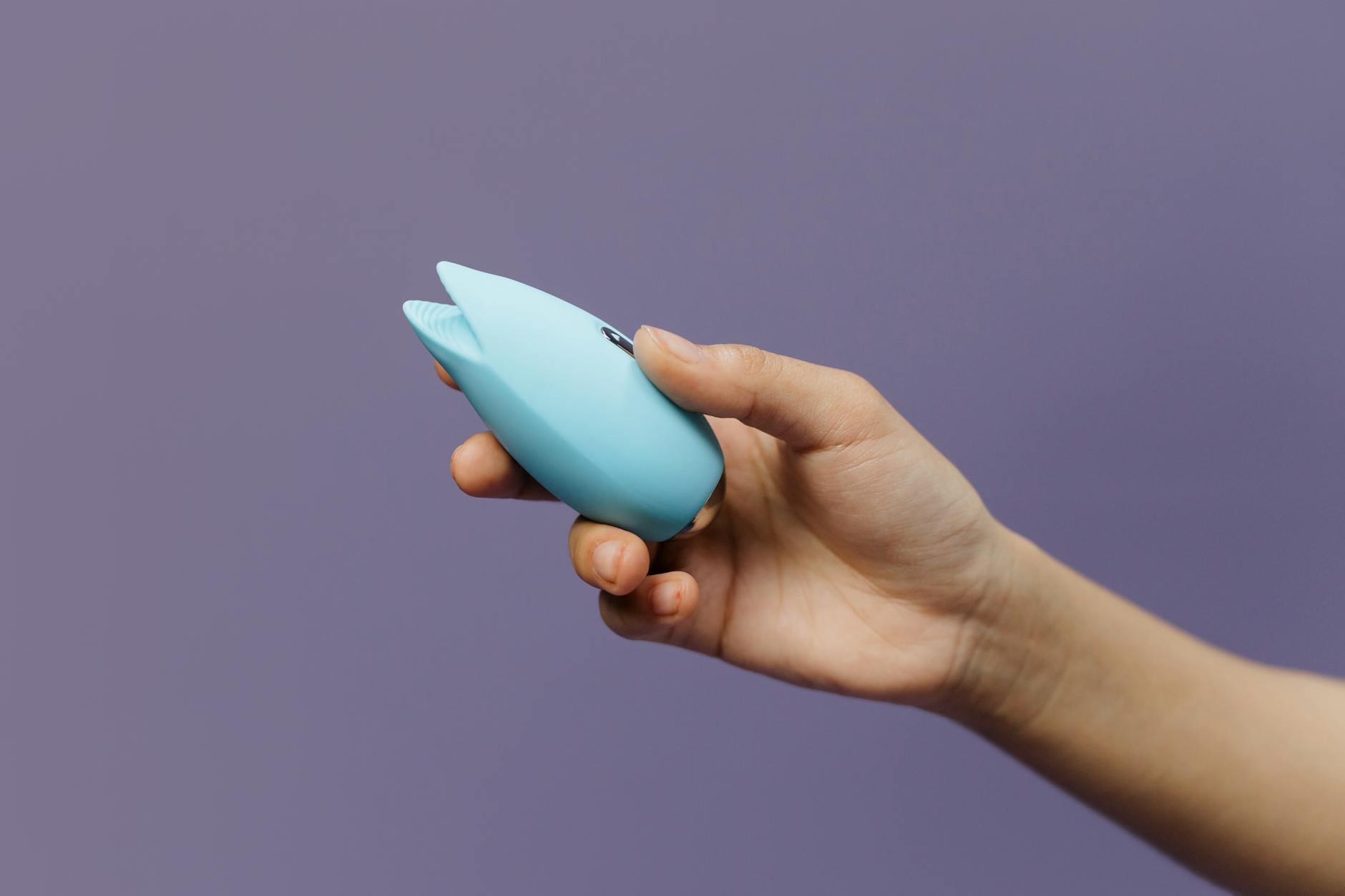
Lemon clitoral vibrators are built for this. Unlike a partner, they don't have their own agenda. They don't pressure, don't judge, don't need anything from you. They respond only to you pressing a button.
Start by using your vibrator fully clothed. Not because there's anything wrong with being naked, but because layers between you and the sensation can feel safer. The vibration reaches your clitoris, but there's psychological distance. You're in control of how much stimulation you want, how direct it is, and you can stop instantly.
Many of my clients start their first session just holding the vibrator while it's on, not using it. Feeling its weight, its texture, its hum. Getting used to the idea that something sexual can be present without being invasive. This alone can take several sessions, and that's exactly right.
The pacing that actually works
Trauma recovery isn't linear, and neither is pleasure recovery. Expect that some days you'll feel ready to explore more, and other days you'll want to go back to just holding it. That flexibility is the whole point.
Here's a timeline that many of my clients find sustainable:
Weeks 1-2: Clothed, fully dressed, just experiencing the vibration with no expectation of arousal or orgasm. The goal is familiarity, not sensation.
Weeks 3-4: Still clothed, but letting the vibration touch your external genitalia through underwear. Notice what happens. If triggers arise, stop. Document them with curiosity, not judgment.
Weeks 5-8: Underwear off if you're ready, or staying clothed for longer. Begin noticing where your nervous system feels safe and where it tightens. Your body will tell you.
Week 8+: Only when you want to. There's no timeline to orgasm. There's no finish line. Some survivors orgasm again within weeks. Others take months or years. Both are normal.
Creating a trauma-informed ritual
Context matters. A lot. Your brain will remember where you first used a vibrator, whether you felt safe, and what was happening around you.
Choose a time when you're alone and unhurried. Not squeezed between other tasks. Afternoons often work better than nights if nighttime holds trauma associations. Use the same space consistently at first, so your nervous system learns it's a safe one.
Before you touch the vibrator, ground yourself. This isn't woo. Grounding is a neuroscience tool. It anchors you in the present moment, which is essential because trauma lives in the past, and your body might slip there.
Try the 5-4-3-2-1 technique: name five things you see, four you can touch, three you hear, two you smell, one you taste. Then use your lemon clitoral vibrator. You're present. You're here. Your nervous system knows the difference.
Start with a duration you know you can handle. Ten minutes. Five minutes. Thirty seconds. Whatever feels possible. Pressure to continue beyond that window is its own form of violation. Your job is to prove to your body that you listen to it now.
When triggers show up (and they will)
A scent, a sound, a particular angle, a memory you didn't expect. Triggers don't mean you're failing. They mean your nervous system is doing exactly what it was built to do: protecting you.
When a trigger surfaces during a session, you have options. You can stop immediately, which sends your nervous system the message that you're in control and safety is non-negotiable. You can pause, breathe, and decide whether you want to continue at a different pace. You can switch to something gentler, like holding the vibrator without turning it on.
After a trigger, step back. Not forever. Just until you feel grounded again. Your next session might be the next day. It might be two weeks later. There's no schedule.
If triggers are frequent and overwhelming, working with a trauma-informed therapist alongside your own exploration is powerful. Some somatic therapists or sex therapists who specialize in trauma can help you understand what your body is trying to tell you. Lemon clitoral vibrators are a tool, not a replacement for that support.
What you might experience (and what's normal)
Some people feel nothing for months. Some feel intense sensation immediately but can't access pleasure yet. Some oscillate wildly. Some cry. Some laugh. All of it is normal.
One of the most common experiences I hear is a kind of creeping groundedness. After weeks of gentle, self-directed exploration, people report feeling more present in their bodies overall. Not during sex, not just during pleasure. Throughout their day. They feel more embodied. More at home.
Others report that orgasm, when it returns, feels different than it did before. Softer. More localized. Some say it feels more real because it's purely theirs now, not tied to trauma or anyone else's need.
Expect that your capacity will change based on stress, relationships, and your nervous system's overall state. You might rebuild pleasure, lose it for a few months during a stressful period, and rebuild it again. That's not regression. That's adaptation.
The role of a partner if you have one
If you're in a relationship, your partner's understanding of this process changes everything. The best partners understand that trauma recovery isn't about them. It's not rejection. It's not a reflection of their attractiveness or the relationship. It's about you restoring your own sense of agency and safety.
If your partner pressures you to move faster, dismisses triggers, or makes pleasure recovery about their own needs, that's a red flag. You're rebuilding trust with your own body first. Partner involvement comes after that foundation is solid.
Many survivors find that exploring with lemon sexual toys alone for months or longer is exactly what they need. And that's fine. Your timeline is the right timeline.
A word on medication and trauma
If you're on antidepressants or anti-anxiety medication, pleasure might feel distant or numb. This is common and sometimes managed through dose adjustment or switching medications. Worth discussing with your prescriber, not something to solve on your own.
Some survivors find that medication actually helps them access pleasure because it quiets the hypervigilance enough to feel safe. Everyone's different.
FAQs
Is it normal to feel nothing when using lemon vibrators after trauma?
Completely normal. Your nervous system might be protecting you by numbing sensation. This typically changes over time as you prove to your body through repeated, safe experiences that pleasure can be reclaimed on your terms. Patience is the tool here, not pressure.
Can I use lemon clitoral vibrators if I have severe triggers around sexuality?
Yes, but slowly and ideally with support. Starting clothed, using grounding techniques before sessions, and stopping immediately if triggers arise gives you control back. A trauma-informed therapist can help you identify what specific aspects of sexuality are triggering and move through them at a sustainable pace.
Should I tell my partner I'm using a vibrator as part of recovery?
That depends on your relationship and your safety. If your partner is supportive and you feel safe, sharing can build intimacy and understanding. If you feel judged, controlled, or unsafe, you don't owe disclosure. Your recovery is yours first.
What if I experience flashbacks or dissociation during a session?
Stop immediately. Grounding techniques like the 5-4-3-2-1 method, cold water on your face, or stepping outside can help anchor you in the present. If dissociation is frequent, mention it to a therapist before continuing. This doesn't mean you can never explore again, but it means you might need additional tools first.
How long does it typically take to rebuild pleasure after sexual trauma?
It varies widely. Some people feel shifts within weeks. Others take months or years. There's no timeline that's wrong. Healing isn't linear. Trust your nervous system's pace, not an arbitrary deadline.
Can I use lemon vibrators if I also have relationship trauma or trust issues?
Absolutely. In fact, solo exploration can be a powerful way to rebuild trust with yourself because the vibrator has no agenda, no expectations, and responds only to you. This safety with yourself can eventually translate to safety with partners, but that's not required.
The deeper work
Lemon clitoral vibrators can be part of your recovery, but they're not the whole story. The deeper work is learning to inhabit your body again, to trust it, to listen to it when it says yes and when it says no. That's ongoing. That's not something a toy solves. But a tool that gives you absolute control, that asks nothing of you, and that you can approach at your own pace. That can help.
Your pleasure matters. Your safety matters more. When you find a way to honor both, you're not just using a toy. You're reclaiming something that was taken from you.