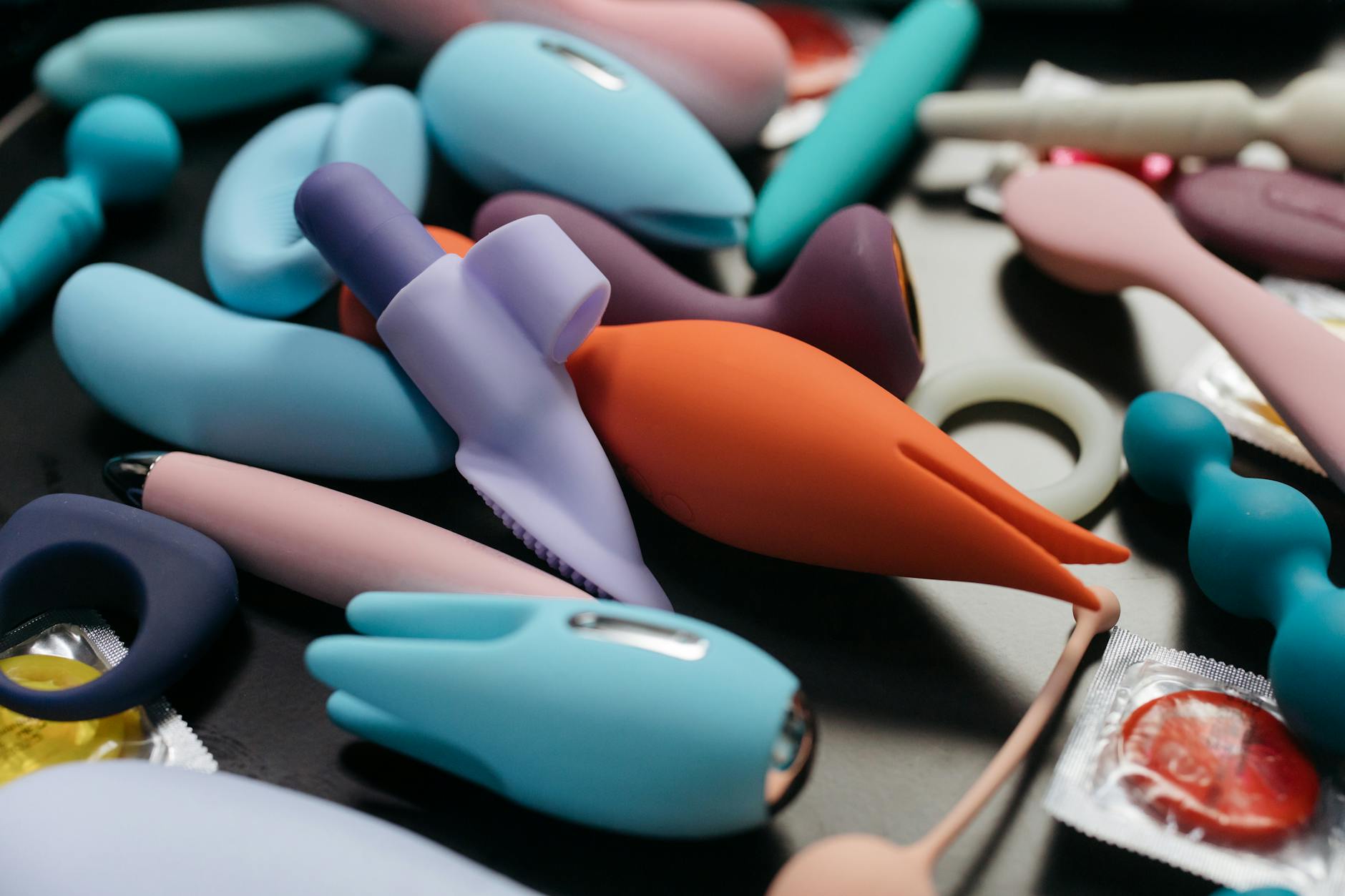
Let's start here: shame is not natural
You weren't born thinking your pleasure was embarrassing. You learned it. From parents who never mentioned sex. From schools that called it dirty. From partners who made you feel watched instead of desired. From culture that sells you the idea that "good girls" don't think about this stuff. The shame you feel right now is accumulated, not innate. Which means it can be unlearned.
I work with people every day who physically freeze up the moment they try to use lemon vibrators alone. Not because their bodies aren't interested. Because their brains won't stop narrating: "This is weird. What if someone finds out? Am I crazy for wanting this?" That self-judgment is so loud it drowns out actual sensation. You're not broken. You're just sitting in a room with a critic who won't shut up.
The neuroscience of shame during pleasure
Here's what happens neurologically when shame enters the picture.
Your brain has two systems that fight for control: the accelerator (sympathetic nervous system) that preps you for arousal and pleasure, and the brake (parasympathetic nervous system) that's triggered by threat and shame. The moment you feel self-conscious, your brain hits the brake. Your body literally cannot relax into sensation when your nervous system is in threat mode.
Using clitoral vibrators requires focus. It requires you to notice sensation, follow your rhythm, let yourself build. But shame fragments that focus. You're split between the part of you that wants this and the part that's judging you for wanting it. You can't be in both places at once. Your nervous system will always pick the threat signal over pleasure.
The good news: you can retrain this.
Start with privacy that feels real
I don't mean just locking the door. I mean creating genuine permission in your mind.
Many of my clients tell me they're "too shy" to use a lemon clitoral vibrator. What they really mean is they haven't built a mental container where this feels safe. If you're still half-listening for footsteps, half-worried about discovery, half-convinced you're doing something wrong, your body won't cooperate.
Set aside time when you actually have the house to yourself. Not borrowed time where someone might come home. Not time you feel guilty about taking. Genuine time where you're not monitoring. Tell yourself: "This is mine. This is allowed." Your nervous system needs to believe it.
Start with your phone off or in another room. Not because you're being "responsible." Because the possibility of interruption is a brake signal. Same with background noise you don't control. Close extra doors. The physical act of securing your space is also a psychological signal to your brain: "Threat level is low. You can relax."
The clothing question (it's weirder than you think)
Here's something therapists don't usually talk about but clients mention constantly: what you wear matters.
If you're sitting fully clothed except for pulled-down underwear, your body is still in "ready to flee" mode. If you're worried a shirt will get in the way, you're still in problem-solving mode. Some people need to be completely undressed. Others need their favorite sweater on. The point is you need to test what makes your body feel safe and settled, not tense.
For many people, especially those who carry shame about their bodies, being fully undressed while using lemon vibrators can feel too exposed. Totally fair. Wear whatever lets you relax. Soft shirt, nothing, underwear off, underwear on. There's no rule. The rule is your nervous system gets to feel secure.
Reframe what you're doing (this changes everything)
Instead of "using a vibrator" (which still sounds transactional and vaguely shameful), think of it as learning your own pleasure.
You wouldn't feel weird about learning to cook. You wouldn't feel weird about learning to massage your own neck tension. This is the same thing. You're gathering data about what feels good, what doesn't, what builds slowly, what hits fast. That's information. That's care.
When the shame voice shows up and says, "This is weird. Why are you doing this?" the answer is: "Because knowing my own body is normal and good." Not because it's necessary to get a partner off. Not because you have to be sexual to be worthy. Because your own pleasure is information you're entitled to have about yourself.
The first time is about nothing
This matters: your goal on day one is not orgasm. It's not sensation. It's not even pleasure necessarily.
Your goal is to notice what happens when you're gentle with yourself. Most people trying lemon vibrators for the first time while carrying shame don't actually feel much. Their bodies are too guarded. That's normal and fine.
Sit with the vibrator. You don't even have to turn it on. Notice the weight of it. Notice how it feels in your hand. If you turn it on, keep it on a low pattern. Notice whether your body tightens or releases. Notice your breathing. Notice what thoughts show up. You're not trying to force anything. You're just creating a relationship with the experience.
If nothing happens except "I felt weird," that's data. Your nervous system is telling you it needs more time, more privacy, more permission, or a different approach. None of those are failures.
Partner shame is its own beast
If your shyness is specifically about using lemon vibrators around a partner, that's different than solo shame.
Many people are comfortable alone but feel exposed or judged when a partner is present. If that's you, three things help. First: talk before. Not during. Tell your partner what you need: lights off, they can stay or leave, you might want their hand elsewhere, whatever. Removing the mystery removes some shame.
Second: remember that a partner watching you experience pleasure is actually intimate. It's vulnerable in a good way. Your shyness is often worry that they'll judge you. Most partners are genuinely turned on by seeing you enjoy yourself. Your pleasure isn't weird to them. It's actually attractive.
Third: start with them not watching. Use your lemon clitoral vibrator solo while they're in the other room. Build comfort alone first. Then gradually let that comfort expand to include them.
The body memory approach
Shame isn't logical, so logic alone won't fix it.
Your body has memories of being told pleasure was wrong. Those memories live in your nervous system. You can't think your way out of them. You have to move your way out.
One practice that works: before you even touch the vibrator, spend five minutes noticing your body without judgment. Where do you feel tight? Where do you feel open? What parts of you feel shame around? Just notice. This is somatic awareness work. You're learning to have a relationship with your body that isn't about fixing or performing.
Then add the vibrator. The combination of body awareness plus gentle sensation helps reprogram the neural pathway from "this is shameful" to "this is mine and it feels okay."
What to do when shame floods in mid-session
Sometimes you'll be using your vibrator and suddenly the critic shows up with full force.
Don't fight it. Acknowledge it: "There's the shame voice." Then keep going anyway. You're not trying to feel nothing. You're practicing the skill of letting sensation exist alongside the shame, instead of letting shame cancel out sensation.
This is what therapists call "distress tolerance." You're building capacity to be with discomfort without abandoning yourself. It's not fun. But it works. Over time, the shame voice gets quieter because you've proven to your nervous system that this is safe.
The solo-to-partner bridge
If you're working toward pleasure with a partner, solo exploration with a lemon vibrator is actually the speediest path.
Why. Because you get to know your own rhythm without pressure. You get to build confidence in private. You prove to yourself that pleasure is possible and yours. Then when your partner is involved, you're bringing expertise instead of shame. You know what works. You can guide them. You're not hoping they figure it out while you disappear into your head.
This is especially true for people who've experienced pressure from partners or past relationships. Taking pleasure off the table as a partnered performance and moving it to solo skill-building often heals the wound that created the shyness in the first place.
Small acts of rebellion
Shame thrives in secrecy and silence. The smallest acts of honesty about your pleasure start to dissolve it.
That might be ordering a lemon clitoral vibrator without hiding your credit card statement. It might be mentioning to a trusted friend that you're learning about your own body. It might be keeping your vibrator visible on your nightstand instead of hidden in a drawer. It might just be saying to yourself, "I deserve this," and meaning it.
These aren't huge acts. But they're acts of reclaiming your pleasure from shame. They're small proof that you're allowed to want this. Your nervous system needs those proofs to slowly relax.
FAQ
Is it normal to feel shame about using a vibrator?
Completely. Shame around pleasure and sexuality is so culturally embedded that most people feel it at some point. The fact that you notice it means you're aware enough to work with it. That's actually the first step toward changing it.
Will shame go away if I just ignore it?
No. Avoidance makes shame grow. The more you avoid using your vibrator because of shame, the more power you give the shame. The antidote is gentle, repeated exposure. Using your lemon vibrator regularly, even when shame shows up, slowly teaches your nervous system that this is safe.
How long does it take to stop feeling shy about pleasure?
Every nervous system is different. Some people feel a shift in weeks. Others take months. You're essentially retraining a nervous system response that's been in place for years. Patience is the actual tool here. Progress isn't linear. You might have sessions where shame is loud and sessions where it's quiet. Both are normal.
Can therapy help with this?
Yes. Especially if your shame connects to past relationships or trauma. A therapist trained in somatic (body-based) work, like someone trained in the Gottman Method for couples therapy, can help you access and release the nervous system patterns that maintain shame. Sometimes professional support accelerates the process significantly.
What if I'm ashamed because I feel weird touching myself?
That's often about early messages that your body wasn't okay to touch or know. Start smaller. Notice your hand on your arm. Notice your breath. Build relationship with your body in non-sexual ways first. Then gradually, when you feel safer, move toward genital touch. There's no rush. Your body will tell you when it's ready.
Does using a lemon vibrator make shame worse if I'm already struggling?
It can, if you're using it as punishment or proof you're broken. But used with genuine self-compassion, as an act of learning and permission, it usually helps shame dissolve over time. The key is your internal story about why you're doing this. If it's "I'm treating myself with care," it helps. If it's "I'm broken and need fixing," shame deepens. Your narrative matters as much as the action.