Let's be honest about quickies
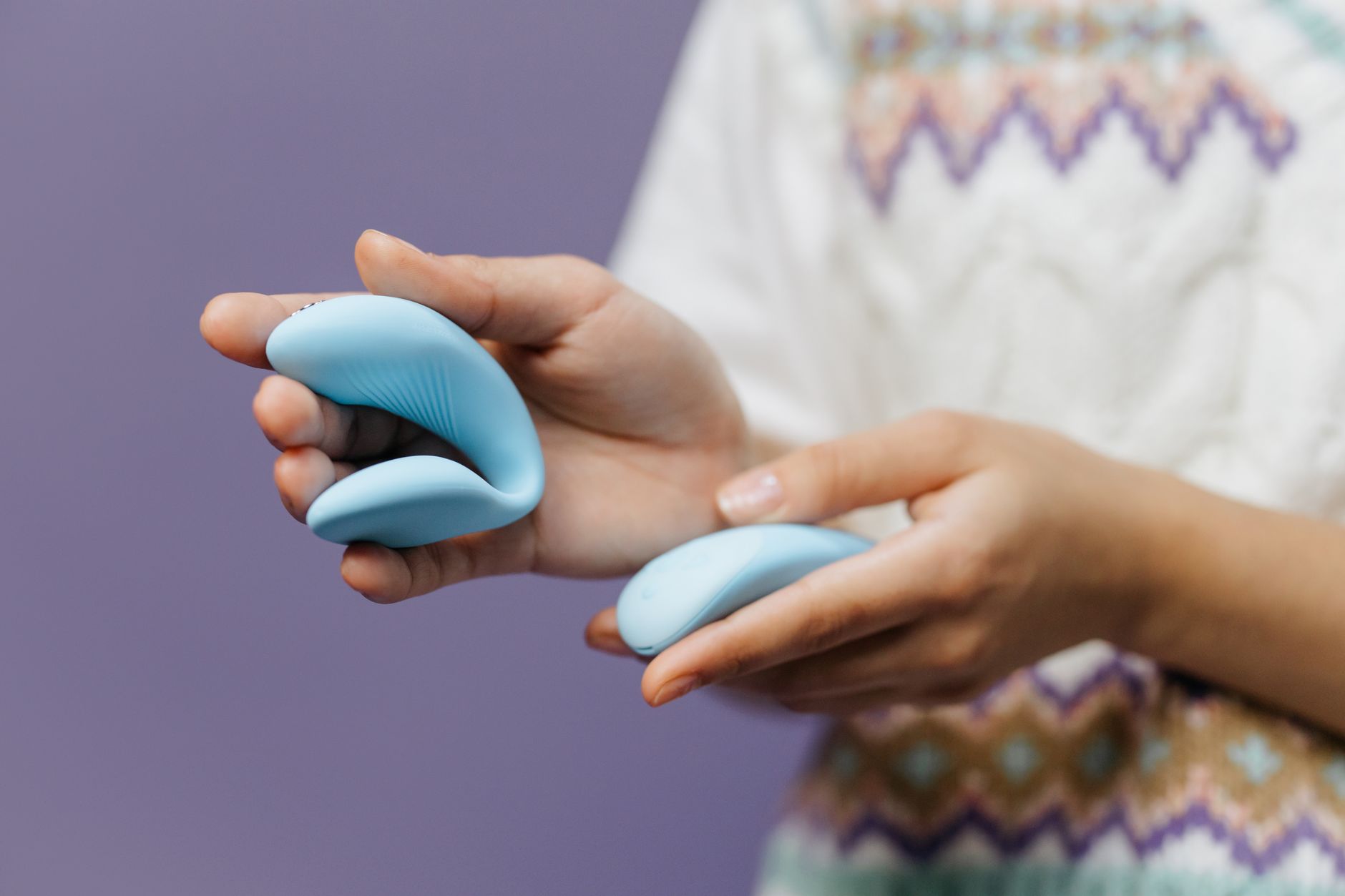
Spontaneous sex gets a bad rap. Either it's treated as this mythical thing that only happens in early relationships, or it's something you're supposed to schedule around your life like a dentist appointment. Here's what I see in my practice: people with the longest, most satisfying relationships have learned to make space for both. The slow, intentional stuff matters. The sudden, unplanned moments matter too. And clitoral vibrators like those from Lemon Clit have quietly become one of the most practical tools for making spontaneous pleasure actually work.
The thing about spontaneous sex is that it's usually short on prep and long on anticipation. You don't have 45 minutes. You might have 10. You don't have time to warm up for ages or coordinate a whole production. You just want to feel good, fast, without it becoming a project. That's where flexibility comes in. And that's where the right toy makes all the difference.
Why spontaneity matters for long-term desire
Research on long-term couples consistently shows that novelty and unpredictability keep desire alive. Not every encounter needs to be planned. In fact, couples who keep some spontaneity in their intimate life report higher satisfaction and less sexual boredom than those who schedule everything. But here's the problem that kills spontaneous pleasure: friction (literal and figurative). If you have to hunt for lube, explain what you want, negotiate intensity levels, or figure out logistics, spontaneity dies. The moment is gone.
Clitoral vibrators solve this differently than other toys. They work fast. The Lem vibrator and similar suction-based lemon sexual toys are engineered for direct, efficient stimulation. You're not building arousal through penetration or complex foreplay. You're activating concentrated nerve endings in seconds. That efficiency is not less intimate. It's just different. And for spontaneous moments, it's exactly what you need.
The physiology of quick arousal
Your clitoris has roughly 8,000 nerve endings concentrated in an area the size of a pea. When stimulated directly, the pathway to orgasm is short and reliable. Unlike penetration, which relies on a cascade of physiological events (tissue engorgement, muscle tension, hormonal shifts), clitoral stimulation can trigger orgasm within minutes even if your body isn't "warmed up" in the traditional sense.
That doesn't mean your brain is less involved. Desire still starts upstairs. But the physical pathway is more direct. This matters for spontaneity because you're not competing with the constraint of your body needing time. If your partner reaches over during a movie and you're interested, you can actually act on that interest in real time instead of waiting 20 minutes for your body to catch up.
Lemon vibrators specifically use suction and pulsation rather than traditional vibration. This creates a different sensation profile. Many people find that suction builds intensity more gradually and feels less dependent on baseline arousal. You can use it from a place of curiosity or neutral desire and have it build toward something stronger. That's the flexibility you need for spontaneous moments.
Setting up for unplanned pleasure
Here are the concrete changes that make spontaneous pleasure actually possible:
Keep your toy accessible. Not hidden in a closet or packed away after use. Bedside drawer, nightstand, bathroom vanity. Somewhere you can grab it in 10 seconds without ceremony. That accessibility removes friction. The longer you have to search, the higher the chance the moment dissolves.
Use a toy that doesn't require setup. Lemon clitoral vibrators are wireless, rechargeable, and ready to go. No cords. No batteries to hunt for. If your toy requires lube, keep water-based lube in the same spot. Same with a small towel for cleanup. You're designing your environment for impulse, not deliberation.
Establish a shorthand with partners. If you're with someone regularly, you don't need to explain what you want every time. A look, a touch, a simple "want to play?" becomes enough. The fewer words you need, the less the spontaneous moment gets talked to death. Language is great for permission and clarity, but it can also interrupt desire. Know your partner well enough to skip some of the negotiation.
Manage expectation setting beforehand. If spontaneous sex is new for you or your dynamic, talk about it when you're not in the moment. "I'd love to use my vibrator sometimes without planning it ahead." "Would you be into quickies?" Get the yeses sorted in neutral time so that when spontaneity arrives, you're not pausing to ask permission you already have.
The rhythm of quick pleasure
Spontaneous doesn't mean rushed or bad. It means efficient. Here's what typically works:
Minutes 0-2: Interest and access. Something triggers desire. You move toward each other or toward privacy. You grab your toy if it's not already in hand.
Minutes 2-5: Warm-up. Even when spontaneous, you usually want a minute or two of touching, kissing, or just being close before the toy comes out. This gives your nervous system a heads-up and helps you transition into arousal mode. You don't need 20 minutes. Two to five works.
Minutes 5-12: Direct stimulation. This is where the Lem vibrator or similar lemon clitoral vibrator earns its place. Start on a lower setting. Let yourself feel what's happening. Many people find that suction-based clitoral vibrators build sensation more gently than traditional vibrators, which can feel overwhelming if you're not expecting it. You can adjust intensity up or hold steady depending on what feels good.
Minutes 12-15: Finish. If you're going for an orgasm, you're probably there or close. If you're just enjoying sensation without coming, you can stop whenever. The beauty of spontaneous pleasure is that it doesn't have to follow the same arc as planned sex. Sometimes you get off. Sometimes you just feel good and then move on with your day. Both are valid.
Spontaneity with partners (different needs, same desire)
Here's where it gets real: you and a partner might have different definitions of spontaneous. One of you might want 10 minutes notice. The other wants zero. One might want it to lead somewhere. The other might want just that sensation and then done.
The answer is not to force it all into one mold. Instead, give yourselves options. You could say, "Sometimes I want us to just use the vibrator together without it being foreplay for something else. Is that okay?" You could also say, "If I reach over and start using my toy, that doesn't automatically mean I want penetration." These small clarifications prevent the person without the vibrator from feeling rejected or confused.
From a coaching perspective, I see couples get into trouble when they treat spontaneous pleasure as having to mean the same thing every time. It doesn't. One day it's a quickie that leads to nothing else. Another day it's foreplay. Some days you both participate actively. Some days one person is just present while the other does their thing. That variability is actually what keeps spontaneity erotic. It's not predictable. It's not a formula.
When spontaneity works best
There's a misconception that spontaneous sex should happen anytime, anywhere. Realistically, it works best when certain conditions are met. You're not exhausted. You're reasonably confident about privacy. You're not stressed about time (even if you only have 10 minutes, you're not rushing to somewhere else in 8). Your partner is in a receptive headspace.
Some couples find that spontaneous pleasure happens best during certain windows: weekend mornings when there's no work pressure, evenings after kids are asleep, vacation days. Others can do it anywhere. The point is to be honest about when you actually feel available for it. Forcing spontaneity at the wrong time kills it just as much as over-planning does.
Lemon vibrators remove one barrier: the time needed for your body to respond. But they can't remove the others. You still need psychological readiness, some level of privacy, and partner cooperation if that's relevant. Work with what you actually have, not what you think spontaneous sex is supposed to look like.
The emotional piece: Why quick pleasure matters
Quickie culture gets dismissed a lot. Like if you're not spending an hour in bed, it doesn't count. But I've worked with plenty of couples where a 10-minute moment of connection kept things alive between longer, more involved encounters. Quick pleasure says, "I want you. This matters. I'm willing to prioritize this even when life is busy." That's actually profound.
Using a clitoral vibrator for spontaneous pleasure also says something about ownership. You're taking your own pleasure seriously. You're not waiting for perfect conditions or for your partner to initiate. You're saying, "I know what gets me off and I'm going to make it happen." That agency is attractive. It's also sustainable. If you're not dependent on someone else to create the conditions for your pleasure, you're less likely to burn out sexually.
For many people, clitoral vibrators become a tool not just for solo moments but for claiming some independence within partnered sex. You can orgasm quickly and reliably. You're not struggling or performing. You know what works and you've got it accessible. That confidence changes everything about how spontaneity feels.
People also ask
How fast can you actually orgasm with a lemon vibrator?
For people who've used clitoral vibrators before, orgasm can happen within 3-8 minutes of starting stimulation. If you're new to vibrators or your body, it might take 10-15 minutes the first few times. The clitoris has a direct pathway to pleasure and orgasm, especially with suction-based toys like the Lem vibrator that focus stimulation rather than disperse it. The more familiar you are with the toy and your own response, the faster it typically becomes. Speed isn't the goal, but it's absolutely a side effect.
Do you need lube for spontaneous pleasure with lemon sexual toys?
It depends on your body and the toy. Water-based lubrication helps and can actually make sensation more intense because it increases glide and reduces friction. If you're using a suction-based vibrator, some people find they don't need lube if arousal is happening naturally. But honestly, keeping water-based lube accessible removes a barrier to spontaneity. It takes 10 seconds to apply and makes the experience feel better for most people. It's worth having on hand.
Can you use clitoral vibrators with a partner watching or participating?
Absolutely. Many people find it's actually more intimate. Your partner can watch, touch you elsewhere, or use their own toy. Some couples use clitoral vibrators as part of partnered sex rather than instead of it. The Lem vibrator or similar lemon clitoral vibrators can be incorporated into foreplay or used during penetration if that's what you want. The key is talking about it beforehand so no one's surprised or confused about what's happening.
What if spontaneous doesn't feel natural for your relationship?
Some relationships are more planned and structured, and that's fine. Spontaneity isn't mandatory for good sex. But if you want it and it's not happening, usually there's a barrier. Exhaustion, stress, lack of privacy, fear of rejection. A clitoral vibrator can't fix those things. What it can do is make quick pleasure less dependent on ideal conditions. You don't need your partner to be in the mood in exactly the right way. You don't need a long warm-up. You just need willingness and accessibility. Sometimes that's enough to tip the scales.
How do you bring up spontaneous pleasure with a new partner?
Directly and early. "I like having sex sometimes without planning it." "I use a vibrator and I'd love to incorporate that." "I want us to be playful and spontaneous." These conversations are awkward exactly once. After that they're just part of how you relate. Most people appreciate knowing what you want instead of having to guess. And if someone's not into spontaneity, better to know that early than to spend months feeling frustrated.
Do clitoral vibrators always have to be about reaching orgasm?
No. Pleasure and orgasm are not the same thing. You can use a lemon vibrator for 5 minutes just to feel good without any goal of coming. You can use it to explore sensation or to warm up for something else. You can use it because you're bored or stressed and you want a quick hit of dopamine. The best part about having accessible tools for pleasure is that you get to decide what you're doing in that moment. Not every use has to have the same outcome.
The bottom line
Spontaneous pleasure isn't rare or impossible. It's actually pretty straightforward once you remove the barriers. A reliable tool like a lemon clitoral vibrator, kept accessible and understood by everyone involved, changes the game. You go from "we'd love to have spontaneous sex but it never happens" to "we actually do this sometimes and it's great." That shift in frequency and possibility does something good for long-term desire and connection. Your pleasure matters enough to make it possible, even when life is chaotic. A clitoral vibrator just makes that possible.