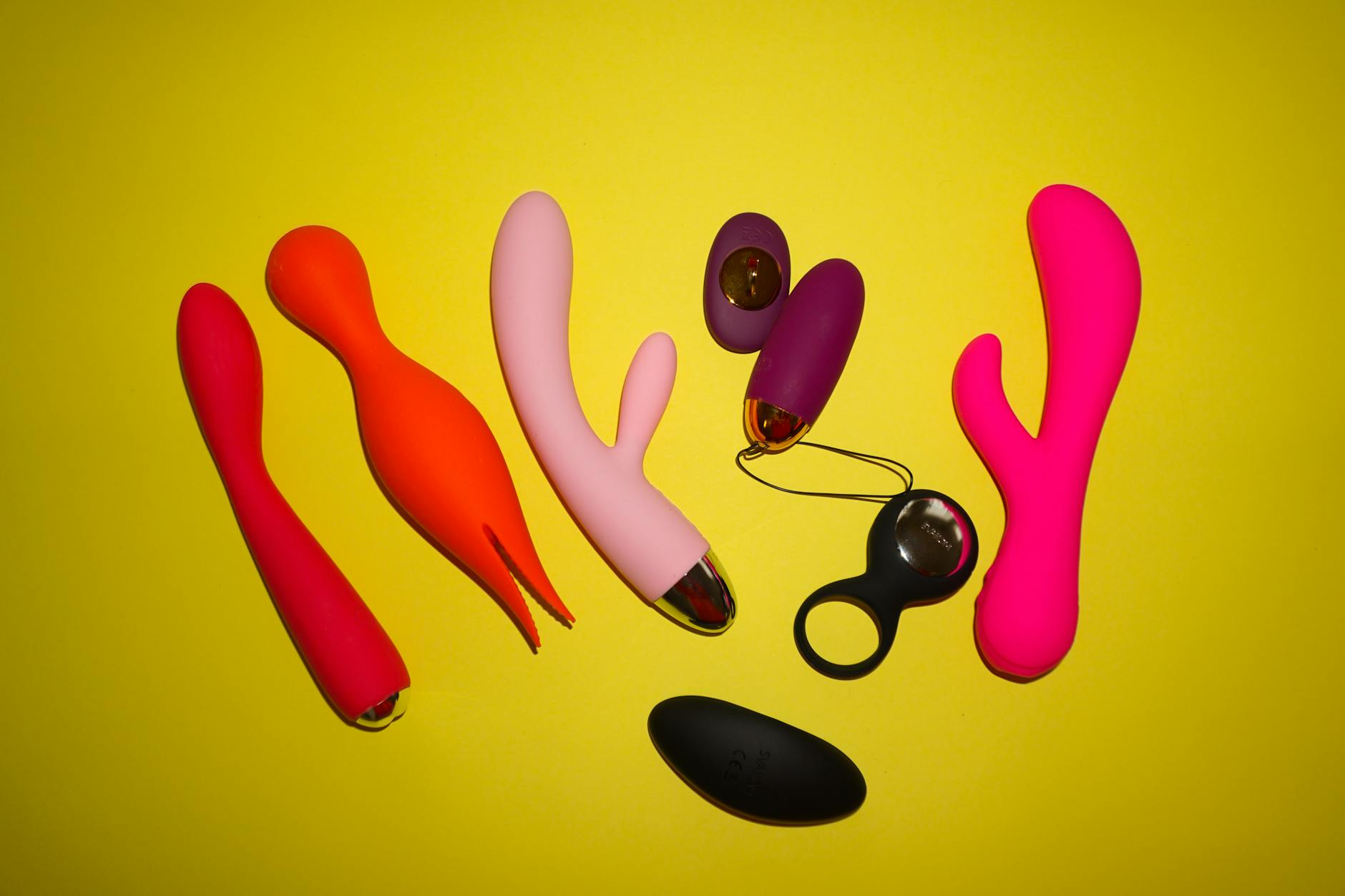
Your clitoris has a cycle too, and nobody talks about it
Let's be real: most people learn that their pleasure works the same way all month. It doesn't. Your clitoris changes sensitivity, swelling, and responsiveness throughout your cycle, and ignoring that fact means you're either using too much intensity when your tissues are tender or too little when you could handle way more. The fix isn't to white-knuckle through it. It's to actually work with what's happening.
This is especially important if you use lemon vibrators or any clitoral vibrator. These tools are precise and powerful, which is great. It's also why knowing your cycle matters. Using the same settings on day 5 as you do on day 20 is like wearing the same shoes to the gym and to bed. Technically possible, not actually smart.
The hormonal shifts that change everything
Your menstrual cycle works in four rough phases, and each one brings different amounts of estrogen and progesterone to your tissues.
Menstrual phase (days 1-5). Hormone levels are low. Your clitoris is less engorged, tissues are thinner, and direct stimulation can feel sharper than usual. This is when you might reach for lower intensity settings on your lemon vibrator, or use it for shorter sessions.
Follicular phase (days 6-14). Estrogen rises. Your clitoris fills with blood, swelling slightly, and tissues thicken. Sensation becomes more diffuse and less sharp. This is often the sweet spot for higher intensity settings and longer sessions. Many people report this is when they can actually feel the difference between lemon vibrators and other clitoral stimulators.
Ovulation (around day 14). Testosterone surges briefly. Your clitoris is at its most engorged, tissues are plump, and sensitivity peaks. This is when people often need the least warm-up time and can jump straight into their preferred settings.
Luteal phase (days 15-28). Progesterone rises while estrogen dips. Your clitoris retracts slightly. Sensitivity becomes inconsistent. Some days feel great; some days feel muted. Pleasure might feel harder to access. This is when rhythm and patience matter more than intensity.
Why your lemon vibrator might feel "wrong" some days
You use your clitoral vibrator, and suddenly it feels too intense. Or not intense enough. Or weirdly numb compared to last week. Before you assume something's broken, check where you are in your cycle.
The first few days of menstruation, when hormones tank, your clitoris loses volume. The tissue around it also becomes less elastic. Using the same lemon vibrator setting you loved last week can feel sharp or even uncomfortable. This isn't failure. This isn't your body being difficult. This is you encountering the biological reality of cycling.
The follicular phase is often the opposite. Your tissues are plumped up with blood and estrogen. You can tolerate more intensity and usually want it. If you've been frustrated that your lemon vibrator doesn't feel "strong enough," the follicular phase might be when it finally feels like enough.
How to adjust your technique by phase
Menstrual phase: Lower intensity, shorter sessions. Start at level 1 or 2 on your lemon vibrator instead of your usual 3 or 4. Add more lubricant than you might normally. Your tissues are thinner, so moisture matters more. Keep sessions to 10-15 minutes instead of 20-30. Use broader, sweeping motions instead of focusing directly on the clitoral glans. This spreads stimulation across a wider area and feels less sharp.
Follicular phase: Go harder. This is your permission to crank it up. Jump to levels 3-5 if you normally sit at 2-3. Try new patterns on your lemon vibrator that you've been curious about. This phase is often when people discover they actually prefer stronger sensation than they thought. Sessions can be longer because your body tolerates it better. Direct stimulation on the glans usually feels great here, not tender.
Ovulation: Stay with it. You probably won't need as much warm-up time. Your clitoris is ready faster. Use your preferred intensity, but pay attention to what's different. Many people report that orgasms during this window feel more full-body and less clitoral. This is normal. Your nervous system is genuinely more receptive. Some people find that this is the phase where they want to layer sensation, like using a lemon vibrator plus internal pressure simultaneously.
Luteal phase: Patience over power. Your sensitivity is unpredictable here. Day 16 might feel amazing; day 24 might feel flat. Instead of chasing intensity, focus on duration and rhythm. Use level 2-3 on your lemon vibrator instead of jumping to 4. Give yourself longer warm-up time. Don't expect to feel the same thing twice. This is the phase to experiment with different patterns and positions because direct stimulation might not land the same way. Some people find that indirect stimulation (the base of the clitoris, the mons pubis) works better here than the glans.
The luteal phase is where most people quit
Honestly, this is the phase that causes the most frustration. Your sensitivity is genuinely lower. Your lemon vibrator might feel fine one day and underwhelming the next. Desire fluctuates. Orgasms take longer or feel less intense. It's tempting to assume something's wrong with you or with the tool.
What's actually happening is that your progesterone is rising while estrogen drops, and that combo naturally reduces clitoral engorgement. This is not broken. This is biology. But it does require a different approach.
Instead of chasing the intensity that worked in the follicular phase, switch to rhythm and pattern. Use the pulse and wave features on your lemon vibrator rather than the steady patterns. Spend more time exploring different spots around the clitoris instead of focusing directly on it. Add external sensation, like a partner's touch or a blanket. The goal in this phase is not to replicate what worked last week. It's to meet your body where it actually is.
This is also when using lemon vibrators when arousal feels slower or weaker than before becomes really relevant. The luteal phase mimics some of the patterns that happen with other kinds of arousal slowdowns, and the strategies overlap.
Tracking your own pattern
Every person's cycle is different. Some people feel the menstrual phase shift sharply; others barely notice it. Some people report that ovulation is their peak; others say follicular feels better. The only way to know your own pattern is to actually track it.
For two months, note down the date, where you are in your cycle, what intensity level you used on your lemon vibrator, how long the session lasted, and whether it felt good, neutral, or disappointing. You'll start to see your own rhythm. Maybe you peak on day 12. Maybe your luteal phase is smoother than the standard description suggests. Maybe you need a break mid-cycle that the textbooks don't mention.
This isn't medical tracking. It's pleasure mapping. And it's one of the highest-ROI things you can do with a clitoral vibrator.
What to do if your cycle is irregular or nonexistent
Not everyone menstruates regularly. Birth control, hormonal conditions, surgery, age, stress, and medication all affect cycle consistency. If your cycle is irregular or you don't have one, you don't need to figure out clitoral pleasure around a schedule that doesn't exist.
Instead, track sensitivity day-to-day. Notice whether certain times of year feel different. Notice whether stress, sleep, or other life factors shift how your clitoris responds. The principle is the same as tracking a cycle: your body changes, and your lemon vibrator technique can change with it.
If you're on hormonal birth control, your cycle is suppressed, so you don't get the predictable hormonal waves. Some people report that their clitoral sensitivity feels more stable and easier to work with. Others miss the natural peaks. Neither is wrong.
The pattern that changes everything
Once you realize your clitoris isn't the same every day, you stop trying to force consistency. You stop feeling broken when a lemon vibrator that felt perfect last week feels off this week. You start working with your body instead of against it. That shift alone makes pleasure more reliable, more enjoyable, and way less frustrating.
Your clitoris has a cycle. Your pleasure has a rhythm. A good clitoral vibrator, like one from Lemon Clit, is flexible enough to work with both. The question is whether you are.
FAQ: Cycle-based sensitivity and lemon vibrators
Does birth control eliminate clitoral sensitivity changes?
Birth control suppresses hormonal fluctuations, so you won't get the peak-and-valley pattern of a natural cycle. Many people report that their sensitivity feels flatter and more predictable on hormonal contraception. Some people say that means they feel less desire overall. Others find that the stability makes pleasure easier to access because there's no guessing game. If you're on birth control and feel like your lemon vibrator doesn't do what it used to, it might not be the tool. It might be that you've adapted to a different hormonal baseline.
What if my "cycle" is actually 35 days or 21 days instead of 28?
That's normal. The 28-day cycle is an average, not a law. If your cycle is longer or shorter, your phases just stretch or compress. Menstruation might last 7 days instead of 5. Your follicular phase might be 18 days instead of 9. The principle stays the same: track your own pattern, and adjust your lemon vibrator use accordingly.
Can I use a lemon vibrator during my period?
Absolutely. There's no medical reason not to. Your tissues are more sensitive and less engorged, so you'll probably want lower intensity and more lubrication. Some people find that orgasms during menstruation actually feel more intense because of uterine contractions. The only reason not to use your lemon vibrator now is if you feel crampy and stimulation makes it worse. That's an individual thing.
Why do I feel more sensitive on certain days even though I'm tracking my cycle correctly?
Because hormones aren't the only thing that shifts. Sleep, stress, hydration, alcohol, caffeine, and what you ate that day all affect blood flow and sensitivity. A high-stress day during your follicular phase might feel less intense than a relaxed day during menstruation. Your cycle is the foundation, but it's not the whole story.
Should I use a different intensity setting every single day?
No. Use the phase-based approach as your starting point. Within a phase, your sensitivity is usually consistent enough that you don't need daily changes. If a setting feels off, adjust it, but don't overthink it. The goal is to work with your body, not to have a rigid formula.
What if my sensitivity peaks during the luteal phase instead of ovulation?
Then that's your peak. Bodies are not textbooks. Some people genuinely feel more responsive and more aroused during the luteal phase. This is less common but completely normal. Track your own data, not the average. That's where the real insight is.
Your body is smarter than any formula. Your lemon vibrator is a tool. The magic happens when you actually pay attention to what changes and adjust accordingly.