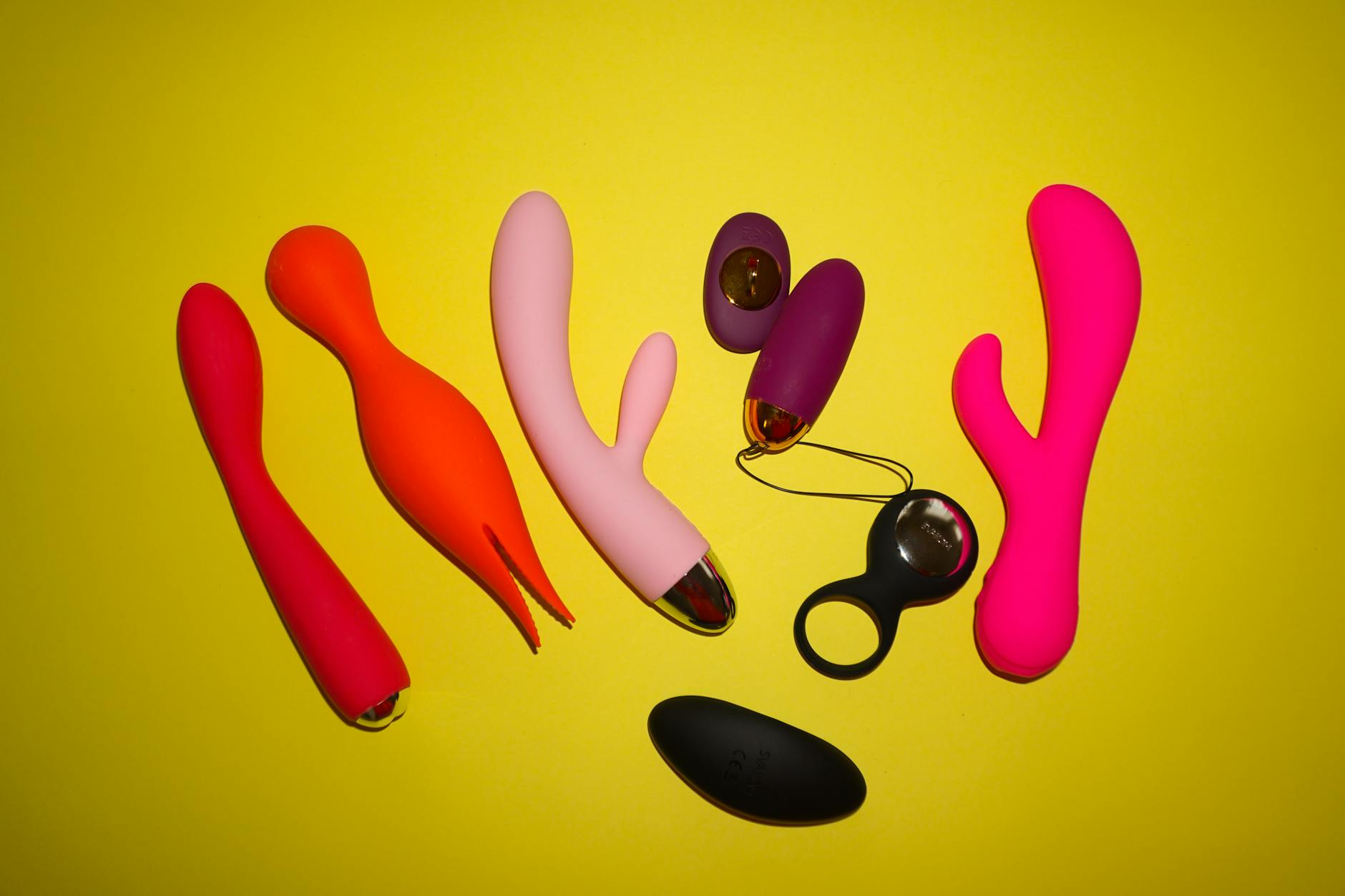
Here's the thing about bringing toys into a relationship
Most of the time, the conversation is way scarier in your head than it is in reality. Your partner probably isn't going to feel threatened or insulted. They might actually feel relieved that you brought it up, or curious, or just want to understand what would feel good for you. The friction lives in the not-knowing, not in the asking.
I've worked with hundreds of couples navigating exactly this moment. The ones who feel most connected afterward aren't the ones who found the perfect toy or nailed some scripted speech. They're the ones who showed up honestly and let their partner do the same.
Why the conversation matters more than the toy
Here's what I see go wrong: someone orders a lemon vibrator in secret, leaves it on the nightstand, and hopes their partner gets the hint. Or they bring it up during sex when things are already heating up, which turns it into something that feels like performance rather than partnership. Or they frame it as a solution to a "problem" when really they just want to try something new.
All of those approaches make the toy the thing. The conversation becomes about the device instead of about what you both want your intimate life to look like.
When you separate the introduction of a tool from the bigger conversation about pleasure, you get room to talk about what's actually true. Maybe you want more stimulation than your partner's hand provides. Maybe you've been faking it and want to explore what real satisfaction feels like. Maybe you're just curious. None of those need to feel loaded.
Starting the conversation (it's easier than you think)
Pick a moment that's not right before or during sex. Saturday morning over coffee. A car ride. Walking around the neighborhood. Anywhere you're side by side, not face to face, with low stakes.
You can say something like:
"Hey, I've been thinking about something I want to talk about. I'd love to explore using a vibrator together. I'm really excited about what might feel good, and I wanted to see if you'd be open to it."
Or: "I've been reading about clitoral vibrators and I'm curious to try one. Would you be interested in being part of that with me?"
Or if you're the partner being asked: "That sounds interesting. Tell me more about what you're thinking."
The point is to make it a question, not a confession. You're not asking for permission. You're inviting participation.
What to say if your partner seems hesitant
Hesitation usually means one of three things. They're worried it means they're not enough. They're unsure how it works. Or they think toys are something only certain people use.
For the first one: "This isn't about what you're not doing. It's about what I want to explore. I want to do it with you because you matter to me."
For the second: "Let me show you what it actually does. It's not as complicated as you might think."
For the third: "A ton of couples use them. It's just another way to have fun together."
Don't oversell. Don't convince. If they're genuinely not interested, that's real information. You can circle back in six months. You can also use a lemon vibrator solo. Toys aren't a couple's issue if one partner doesn't want them yet. They can still be your pleasure.
Picking the right lemon vibrator for a first-timer couple
Honestly, the Lem is the perfect entry point because it doesn't look intimidating and it's intuitive to use. The suction mechanism feels different from traditional vibration, which often surprises partners in a good way. It's not a huge commitment or a complicated learning curve.
What matters more than the specific device is choosing something that:
Looks approachable. If you pull out something that looks medical or aggressive, your partner's nervous system is going to register that. Lemon Clit vibrators are designed to be beautiful and touchable, not scary.
Isn't loud. A loud vibrator kills the mood and adds performance pressure. Quieter devices let you both relax into the experience.
Has adjustable patterns. You want to start low and explore together. Not every partner wants to go straight to intensity level 5.
Feels good in your hand too. If you're using it together, your partner's going to be holding it or at least touching it while you're using it. A toy that feels good to touch matters.
The actual introduction (when you're both ready)
Don't make it a whole event. Don't put on mood music and dim the lights like you're performing in a film. Just bring it into the room the same way you'd bring in anything else.
You might say: "This is what I'm thinking we could try. Want to see?"
Show them how it works. Let them hold it. Let them turn it on and feel the sensation for themselves. Most people are less nervous once they understand what's actually happening mechanically.
When you're ready to use it during sex or solo play, start with low intensity. Your partner gets to watch you experience pleasure with it, which is actually incredibly connecting for a lot of couples. It's vulnerable in a good way.
Common things that happen (and why they're fine)
Your partner might feel a little left out at first. That's normal. You're experiencing something novel and they're watching. Invite them in by asking what they notice, how it looks, what they'd like to try next.
You might need to pause and adjust. Maybe the angle isn't right, or you want to start at a different intensity, or the conversation is going in a direction you didn't expect. That's all fine. Toys aren't complicated, but they're also not mandatory. You can stop and just be together instead.
One of you might find out that toys aren't actually your thing. Also fine. You tried, you learned something, you move on.
Orgasms might feel different or take longer with a partner watching. That's not the toy's fault, that's just how bodies work under attention. Slower warm-up helps. More lube helps. Patience helps most.
What changes after the first time
Usually nothing dramatic. You've now got a tool you can use together or solo. The conversation got easier. You have more information about what feels good.
Some couples find that introducing toys opens up bigger conversations about pleasure and intimacy that were waiting to happen. When you've been brave about one thing, other things feel less risky to ask for.
Some couples use the toy once and then don't for months, and that's okay too. Not every tool needs to be part of your regular rotation.
The point isn't to make toys essential. It's to make your intimate life bigger and more honest. When you can talk about lemon vibrators with your partner, you can probably talk about a lot of other things too.
FAQ: Introducing Toys to a New Partner
What if my partner says no outright?
That's their boundary and it deserves respect. You can ask if it's a "not right now" or a "not ever." If it's the latter, you get to decide what that means for you. Can you use a lemon vibrator solo and still feel connected? Does this relationship have room for what you need? These are real questions worth sitting with.
Will introducing a toy hurt their ego or make them feel inadequate?
Not if you frame it right. A vibrator isn't a replacement for your partner, it's an addition to what you already have. The conversation that prevents ego hurt is the one where you're honest about why you want this. "I want to feel something different" is not the same as "You're not enough." Most partners can hear that distinction if you help them.
How do I know if my partner will be into it or weirded out?
You don't until you ask. But here's what I've noticed: partners are usually less weirded out than the person bringing it up. The anxiety lives in anticipation. Once it's on the table, people tend to respond with curiosity or "I'm not sure, let me think about it" rather than rejection. Give them space to sit with the idea.
Should we watch porn or read erotica together first to warm them up to the idea?
Not necessary and often distracting. You want your partner focused on you and the conversation, not performance or comparison. Keep it simple. "Here's a thing I want to try with you." Done.
What if we try it and it's awkward or doesn't feel good?
Welcome to literally every new thing in a relationship. Awkwardness passes. Not feeling good the first time is information, not failure. You can adjust the angle, the intensity, the timing. You can also just laugh about it and try again later. Most of the couples who feel most connected around toys are the ones who gave themselves permission to be a little clumsy about it.
How do I bring up lemon vibrators specifically if my partner doesn't know anything about toys?
You don't need to lead with the brand. You can start by saying you've been interested in exploring clitoral vibrators and you've done some research. When you're ready to actually get something, then you can talk about which one. "I've been looking at some options and I really like this one because..." Let them be part of the choosing. That increases buy-in.
The real payoff
Here's what I know after years of working with couples: the ones who navigate this moment well don't end up having better sex because of the toy. They end up having better sex because they got more comfortable asking for what they want.
You might learn that your partner's actually been wanting to try something too and never knew how to bring it up. You might discover that conversations about pleasure lead to conversations about other things you've been holding back. You might just feel closer because you both showed up honestly.
The lemon vibrator is just the vehicle. The real work is the conversation.