
How to Use Lemon Vibrators After Birth Control Changes Your Sensitivity
Let's be real. You switch birth control, and suddenly everything feels different down there. Maybe a lemon clitoral vibrator that used to work perfectly now feels too strong, or you need more intensity than before. Neither scenario is weird or broken. Your hormones just changed, and with them, your nerve sensitivity.
Here's the thing nobody explains: birth control rewires sensation at a physiological level. It's not psychological. It's not in your head. It's estrogen and progesterone doing their job, and when the dose or formula changes, your clitoris gets the memo. Understanding what's happening means you can stop second-guessing yourself and start adapting your practice with lemon vibrators or any sexual toy.
What birth control actually does to sensation
Hormonal contraceptives like the pill, patch, or ring flood your system with synthetic estrogen and progestin. These aren't your body's naturally occurring hormones. They're chemical cousins designed to suppress ovulation, but they do way more than that. They change blood flow to genital tissue, they alter the thickness of vaginal and clitoral skin, and they shift neurotransmitter activity in the areas of your brain that process pleasure.
When you switch from one contraceptive to another, the hormonal load changes. Moving from a high-dose pill to a low-dose formula? Your estrogen bottoms out. Switching from the pill to the implant? The dosing is completely different, and it releases hormones more directly into your bloodstream. Each shift ripples through nerve sensitivity.
The most common effect is dampened sensation. People on hormonal birth control often describe clitoral stimulation as feeling muted or distant, like touching yourself through a layer of insulation. Some describe numbness. Others find that sensitivity is weirdly uneven across the clitoris, or that certain patterns (like the pulsing mode on a lemon vibrator) suddenly don't register.
But here's the counter-intuitive part: some people become more sensitive on new birth control. If you've switched to a lower-dose pill or a non-hormonal method, sensation can sharpen. Your clitoris might feel almost too alive. Both are normal. Both are temporary as your body adjusts.
The adjustment window: how long does this last?
Most hormonal shifts stabilize within 2 to 4 weeks, but full neurological adaptation can take 2 to 3 months. Your nervous system has to recalibrate. During that in-between time, what you're feeling (or not feeling) is real, but it's also in flux.
This is crucial: don't panic and abandon lemon vibrators entirely. Don't assume your body is broken or that you've lost the ability to enjoy pleasure. You're in a recalibration phase. Everything will land somewhere new, but it will land.
How to adjust your practice with clitoral vibrators during transition
If sensitivity has dropped, you have three practical moves.
First, experiment with intensity. If you usually start on pattern 3 or 4 of your lemon vibrator, drop down to 1 or 2 for a few weeks. Let your nervous system find the stimulation it needs without forcing it. As sensitivity returns, you can climb back up. This isn't failure. It's listening.
Second, extend your warm-up time. Arousal cascades take longer when hormones are shifting. Budget 20 to 30 minutes instead of 10 or 15. This isn't wasting time. It's giving your nervous system the runway it needs to build. Use the first 10 minutes for non-genital touch. Hands on your torso, neck, inner thighs. Let arousal spread across your whole body before you bring in the lemon vibrator.
Third, try different stimulation patterns. The steady buzz that worked last month might feel flatter now. Pulsing patterns sometimes register better during hormonal transitions because the on-off cycle can cut through the muting effect. The suction-based approach of a lemon vibrator works differently than straight vibration. If vibration feels dull, that gentle suction might be the nudge your body needs.
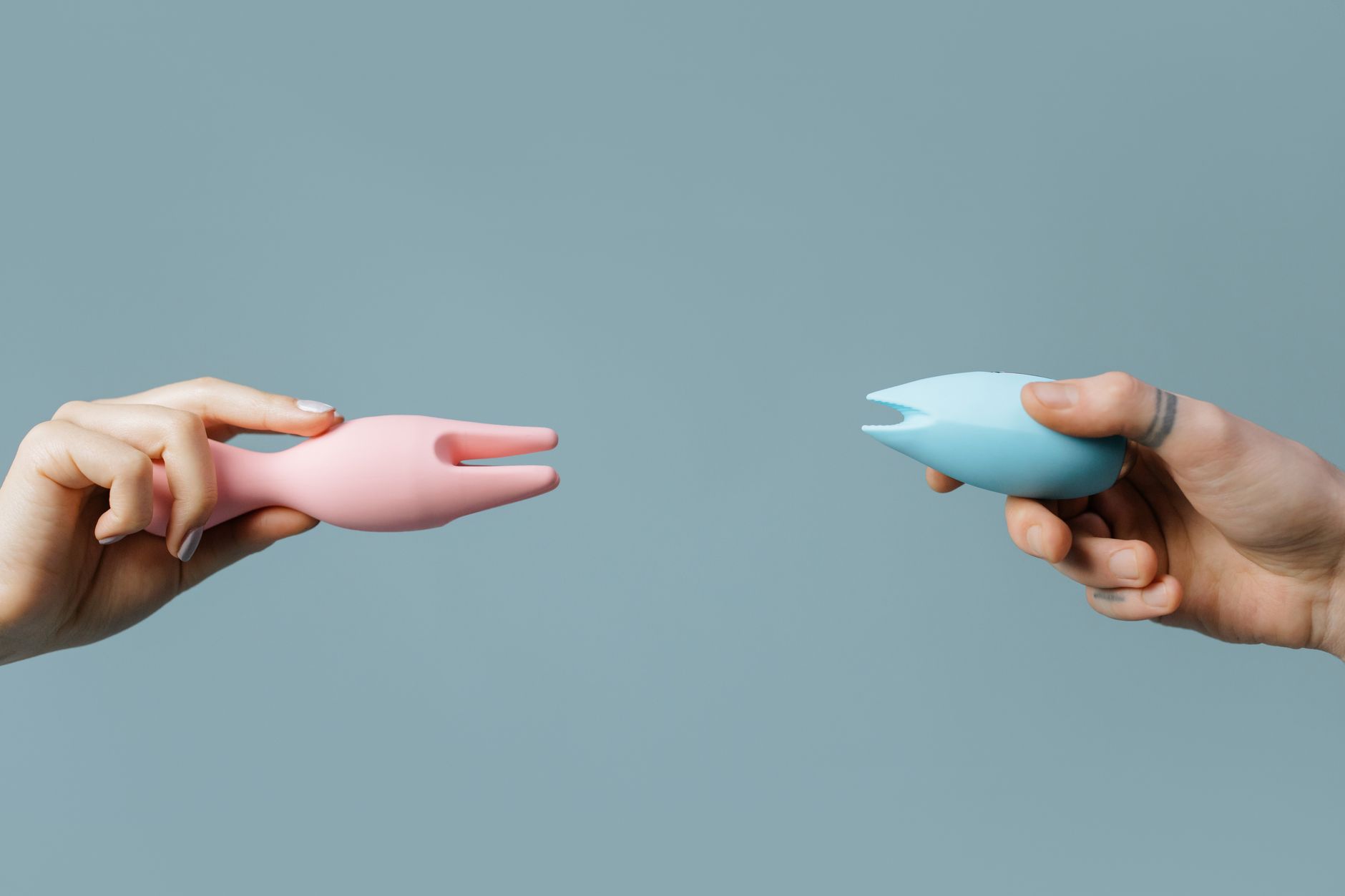
Photo by cottonbro studio on Pexels
If sensitivity has spiked, dial backward. Start at the lowest setting. Some people find that tapping the vibrator against the area around the clitoris (not directly on it) gives you the stimulation without the overwhelming intensity. You can also use the lemon vibrator over underwear or a thin barrier. This buffers the sensation in a way that might feel perfect during this heightened phase.
The hormonal wild card: your cycle still matters
Birth control flattens your cycle, but it doesn't erase it entirely. Breakthrough hormones leak through. If you've been on the same contraceptive for years, you know your body's micro-rhythms. When you switch, those rhythms shift, and so does your sensitivity at different points in the month.
Pay attention to when you feel most and least responsive. Some people find their sweet spot is the week after they start a new pill pack. Others report that their mid-cycle window (even on hormonal birth control) still brings a sensitivity spike. Tracking this for 2 to 3 months will give you a roadmap. Then you can plan your solo practice or partnered time around your body's actual response pattern, not some theoretical ideal.
When to consider a different contraceptive method
Not all birth control tastes the same in your body. Some formulas are perfect. Some tank your libido or numb sensation permanently. If it's been 3 months and sensitivity hasn't returned, or if it's worse than it was at month one, talk to your prescriber. You might be on a dose that's too high for your body, or the progestin type might not vibe with your neurology.
The non-hormonal copper IUD (Paragard) shifts sensation in a completely different direction. Some people swear it brings back clarity they didn't know they'd lost. Fertility awareness methods have no hormones at all, which means baseline sensation stays stable. If birth control sensitivity is a dealbreaker for your pleasure, you have options. It's worth exploring them.
What you should do right now
Stop waiting for sensation to magically return. Start experimenting today. Grab your lemon vibrator, or any clitoral vibrator you own, and treat the next month as a research phase. Lower the intensity. Extend the foreplay. Try different patterns. Notice what's changing week to week.
Your body isn't broken. It's recalibrating. And that's actually useful information. The more you pay attention to how your sensitivity shifts with hormonal changes, the better you get at reading what your body needs in real time. That skill matters across your whole life, not just when you're dealing with birth control transitions.
Your pleasure is worth the attention. And your body is absolutely capable of finding it again.
People also ask
Can switching birth control permanently change sensitivity?
No. Permanent changes are rare. Most people stabilize within 3 months of a new contraceptive. If you stay on it for a year and sensitivity hasn't improved, that's a sign the formula might not work for your neurology. But stopping or switching will usually bring baseline sensation back. The shift is reversible.
Why do some birth control methods affect sensation more than others?
Dosage and hormone type matter hugely. Low-dose pills affect sensation less dramatically than high-dose formulas. The type of progestin (there are many) hits different people's nervous systems differently. Hormonal IUDs release hormones directly into your uterus and bloodstream, which can feel more intense than the pill. Non-hormonal methods have zero impact on sensitivity. Your prescriber can help you match your method to your body's response.
Is numbness from birth control the same as sensitivity loss from other causes?
No, not entirely. Numbness from birth control is hormonal and reversible. Sensitivity loss from long-term toy use is about desensitization and requires a different strategy (usually a break and lower-intensity stimulation). Loss from anxiety or stress has psychological roots. Figuring out which one you're dealing with helps you fix it faster.
Should I use lemon vibrators differently if I'm on a non-hormonal IUD?
Yes and no. Non-hormonal methods don't change baseline sensation, so you don't need to recalibrate intensity. But the copper IUD can sometimes make cramping worse during menstruation, which affects arousal around that time. Some people find that using lemon clitoral vibrators right before or after their period works better than during it. Trial and error is your friend here.
How do I know if birth control is the real reason my sensitivity changed?
Timing is the biggest clue. Did sensitivity shift right after you started new contraception? It's probably the hormones. Did it happen gradually over months while you've been on the same method? Something else is likely at play. Keep a simple log for 2 to 3 months. Note the days you use your lemon vibrator, what intensity felt good, and how responsive you felt. Patterns emerge fast.
Can I use the same lemon vibrator settings before and after a birth control switch?
Maybe not right away. Your nervous system is recalibrating, so settings that felt perfect before might feel off for a few weeks. But yes, once you stabilize on new birth control (usually 2 to 3 months), you'll likely return to your original preferences. This is temporary. Use the transition time to explore what else might feel good.
Need more support navigating how your body responds to changes? Reach out. We're here to help you figure out what works for you.