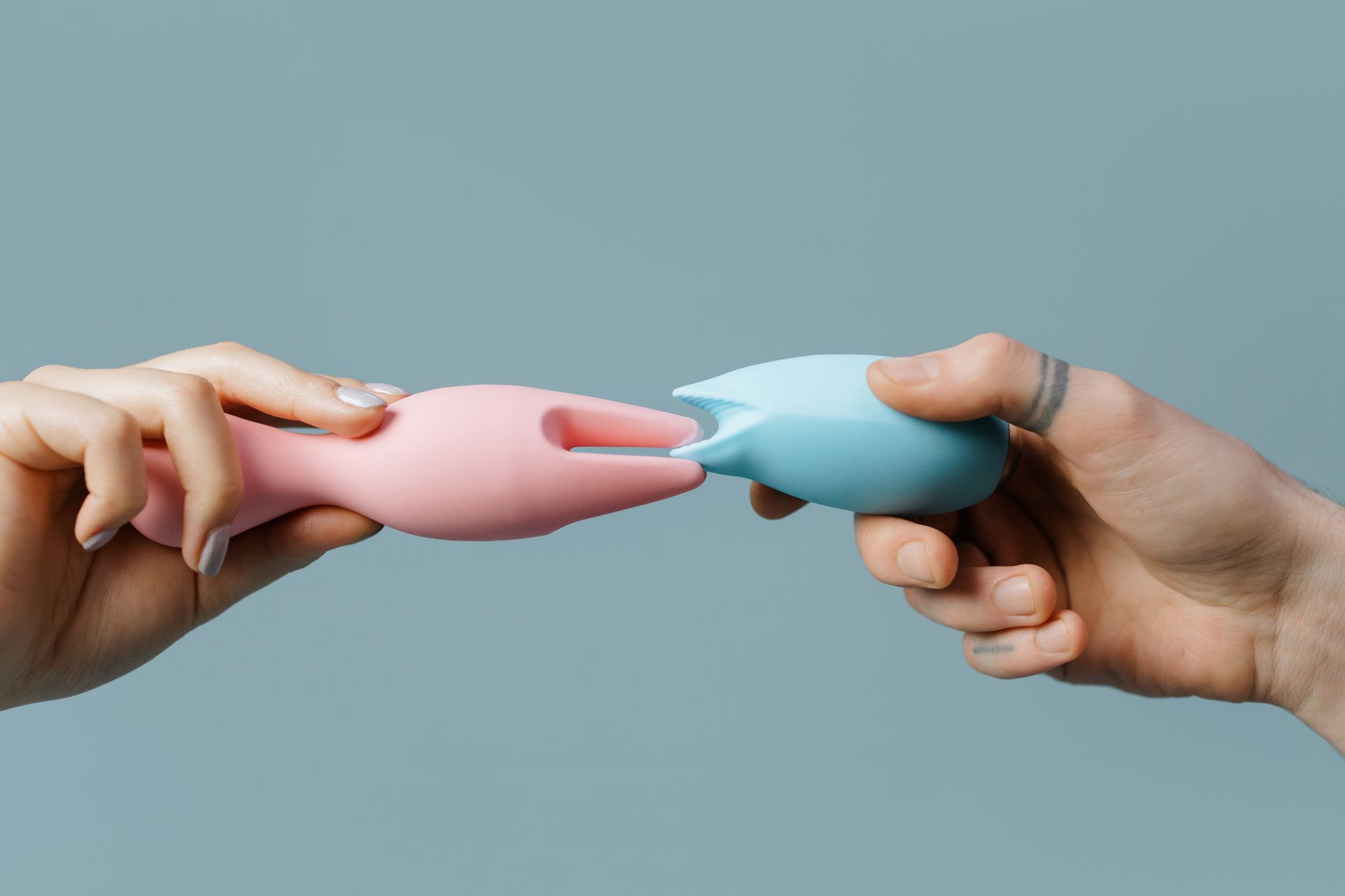
How to Use Lemon Vibrators When Orgasms Don't Feel the Same After Hormonal Changes
Let's be real: when your orgasms change, it's unsettling. Not bad necessarily. Just different. And different without warning or explanation can feel like something broke.
It didn't. Your body shifted. Hormonal changes—whether from perimenopause, menopause, birth control switches, or postpartum recovery—reshape how orgasms actually feel. The intensity, the buildup, the release itself. All of it can transform. The question isn't whether you can still have them. The question is how you adjust your approach.
What actually changes when hormones shift
Here's the physiology without the jargon. Estrogen and testosterone both affect tissue thickness, blood flow, and nerve sensitivity in the clitoris. When these hormones drop or fluctuate, the tissues thin slightly and the clitoral glans becomes less engorged during arousal. This doesn't mean less sensation capacity. It means sensation concentrates differently.
Many people describe post-hormonal-shift orgasms as more localized. Less of a full-body wave, more of a focused, concentrated release. Some find that intensity actually increases in the moments of climax, even though buildup takes longer. Others report that orgasms come in waves instead of one sharp peak. All of this is normal.
The neural pathways don't change. The clitoral nerve density doesn't diminish. Your brain's ability to process and create pleasure remains intact. What shifts is the stage on which that pleasure plays out.
Why this matters for how you use a lemon vibrator
Your lemon clitoral vibrator was already designed around precision and variability. But now those features become even more important. The suction patterns, the ability to adjust intensity mid-session, the lighter touch capability—these aren't workarounds. They're exactly what works with your new baseline.
Many people who used lemon vibrators before a hormonal shift notice they need to start at lower intensity levels. Not because they've lost sensitivity, but because the clitoral tissue is more directly exposed to sensation. Where you used to jump to pattern 5, you might now start at pattern 2 or 3. Where you used to build over 3 minutes, you might now spend 7 to 10.
This isn't regression. It's recalibration.
The warm-up phase lengthens (and that's actually an advantage)
One of the most consistent changes people report: arousal takes longer. Where desire used to spark in 5 minutes, it now takes 15 or 20. This frustrates people who expect their bodies to work the same way they always have.
But here's what I've seen repeatedly in my practice: that longer warm-up window creates deeper arousal. More time to actually feel what's happening in your body. More space for your nervous system to settle into desire instead of rushing through it.
Start using your lemon vibrator only after you've spent time on other forms of stimulation. Manual touch. Kissing. Mental focus. Let your body warm itself up before you introduce the vibrator. When you do, many people find the contrast between manual touch and the vibrator's precision actually heightens response.
Pattern selection when intensity feels unpredictable
Hormonal shifts can make your sensitivity feel inconsistent day to day. One day pattern 3 feels perfect. The next day it feels too intense or not quite enough. This is real and it's temporary as your body settles into its new baseline.
The solution: start every session at the lowest pattern. Let your body tell you what it needs that day. Your lemon vibrator lets you shift mid-session without stopping, which means you can climb from pattern 1 to pattern 4 in stages and listen to your body's feedback at each level.
Many people also find that gentler, longer patterns work better than aggressive pulse sequences when hormones are shifting. The suction action of lemon vibrators actually shines here. Suction doesn't require tissue to be as engorged as friction-based stimulation does. It works beautifully with thinner tissue because it's creating sensation through a different mechanism entirely.
What to do when orgasms feel weaker or incomplete
If your orgasms used to feel like a definitive peak and now they feel more like a plateau, or if they feel smaller than you remember, the instinct is usually to chase it harder. Use stronger patterns, stimulate longer, push more intensity.
Don't. That approach often backfires. Weaker or incomplete-feeling orgasms usually respond better to focused, sustained stimulation at moderate intensity than to aggressive escalation. Think of it like the difference between chasing a butterfly and sitting still so it lands on you.
Use your lemon vibrator at a consistent, sustainable pattern for 5 to 15 minutes. Let your arousal deepen gradually. Many people find that when they stop fighting for the orgasm and instead invite it, the sensation arrives differently but arrives completely. The intensity might be concentrated instead of expansive. The build might be slower. The release might come in waves instead of one peak. All of this counts.
Partnered use during hormonal transitions
If you have a partner, they need to understand that your body's timing has changed. Not temporarily—usually permanently, though it stabilizes over time. This isn't about them doing something wrong or you needing something different about their touch. It's about your nervous system needing more time and different sequencing.
Using your lemon vibrator with a partner actually makes this easier to communicate. Instead of trying to explain abstract changes, you're showing them concretely. "I need 10 minutes of foreplay before this feels good" becomes visible. "I like pattern 2 better than pattern 5 right now" becomes testable.
Many couples also find that bringing a lemon clitoral vibrator into partnered sex during hormonal shifts actually deepens connection. You're both problem-solving. You're both paying attention. You're both discovering what pleasure looks like in this new chapter.
The mental piece (because it matters as much as the physical)
Hormonal changes hit different when there's a grief layer underneath. If the shift includes perimenopause or menopause, you might be grieving fertility or youth alongside the physical changes. That grief is real and it absolutely affects sexual response.
Your nervous system can't fully relax into pleasure if you're also carrying loss. So the first step isn't always about adjusting your vibrator use. It's about acknowledging what's changing beyond just the orgasm itself. That might mean therapy, conversations with your partner, time with friends who've been through it, or simply naming it to yourself.
Once that grief has somewhere to go, many people find that their sexuality actually expands during hormonal transitions. The pressure to perform a particular kind of orgasm lifts. The goal-oriented, efficiency-minded approach to sex softens. You get to discover what pleasure actually feels like when you're not chasing an old version of yourself.
When to seek outside support
If you're experiencing pain alongside the orgasm changes, don't wait. That's a signal to talk to a healthcare provider. Genitourinary syndrome of menopause and other hormonal-related conditions are treatable, and early treatment makes everything else easier.
If desire has completely flatlined alongside the orgasm changes, that's also worth exploring with a professional. Sometimes hormonal shifts affect desire separately from physical response. Sometimes antidepressants or other medications contribute. Sometimes it's grief or relationship tension wearing a hormonal disguise. A good therapist or menopause-trained provider can help you untangle it.
But if the orgasm has just changed shape without disappearing entirely, you're not broken. You're adapting. And your lemon vibrator is built for exactly this kind of adaptation.
FAQ: Hormonal Changes and Lemon Vibrators
Why do orgasms feel more localized after hormonal shifts?
When estrogen and testosterone levels drop or fluctuate, the clitoral tissues change structure slightly. They become less engorged during arousal. This means sensation concentrates in the clitoral glans itself rather than radiating outward. It's not less intense—it's differently intense. The nerves are still firing. The sensation is just more concentrated.
Can I rebuild the same orgasm I used to have?
Not exactly the same, because the physical conditions that created it have changed. But many people find that with time and exploration, they discover orgasms that feel equally satisfying, just different in character. The goal isn't recreating the past. It's discovering what your body is capable of now. Some people actually report more intense orgasms after hormonal shifts, once they've adjusted their approach.
Should I use higher or lower intensity patterns with my lemon vibrator during hormonal changes?
Start lower and let your body guide you. Hormonal shifts make sensitivity more variable than before, so beginning at pattern 1 or 2 and working up lets you find the right intensity for that particular day. Your nervous system is recalibrating. Starting gentle respects that process.
How long does it take for orgasms to stabilize after hormonal changes?
It varies widely. Some people stabilize within weeks. Others take several months. Perimenopause can be particularly variable because hormones are fluctuating rather than steadily shifting. If you're in menopause, most people see stabilization within 6 to 12 months. During that adjustment period, consistency in how you use your vibrator helps your body learn its new patterns.
Is it normal for orgasms to feel weaker after hormonal changes?
Yes, and it's also normal for them to feel stronger, different in timing, or both at different times. Hormonal shifts don't diminish the capacity for orgasm. They change how buildup happens and how release expresses itself. What felt like a wave before might now feel like a focused pulse. The sensation is real. The pleasure is real. It's just arriving in a different package.
Can my partner help me adapt to these changes?
Absolutely. The best approach is to experiment together and communicate explicitly about what's changing. Using your lemon vibrator with a partner present means they can learn your new patterns alongside you. It transforms what could feel like a loss into a shared exploration. Many couples find this phase actually deepens intimacy because you're both so focused on what works now.
The bigger picture
Your body isn't broken. It's transitioning. Hormonal changes are one of the most common and most misunderstood shifts in sexuality, because no one talks about the actual mechanics. You're left guessing whether it's normal or whether something's wrong with you.
It's normal. Your lemon clitoral vibrator adjusts beautifully to this transition because it was designed with variability in mind. Lower patterns. Suction that doesn't require tissue to be fully engorged. The ability to shift intensity mid-session. All of these features that seemed nice to have now become essential to working with your changing body.
The orgasms you have now might feel different than the ones you had before. They're also deeply capable of being exactly what you need. That's worth exploring with patience, without trying to force your body back into an old shape. If you need guidance, reach out to us.
Further Reading: Explore how hormonal changes affect your pleasure in different contexts. If you're navigating reduced libido after relationship stress or discovering your body after major life changes like postpartum recovery, these guides offer complementary perspectives. For deeper understanding of sensitivity differences, see how to choose between lemon vibrator patterns for your sensitivity level.