
Why sensations go numb when your partner is there
Here's the thing that nobody talks about at dinner parties: sometimes the person you love can be the exact reason your body stops responding. It sounds backwards, but it's one of the most common experiences couples report. You're aroused, you're present, you want this to feel good, and then somewhere in the middle of it, everything goes quiet. The sensation flattens. You can feel the physical movement, but it's like you're watching it happen to someone else.
That numbness isn't because you don't love them. It's not because the sex is bad or your body is broken. It's usually about one of three things: performance pressure, emotional distance, or what I call "sensation hijacking." Let me explain.
The three patterns that create numbness
Performance pressure is the first culprit. When you're in your head worrying about whether you're taking too long, or if your sounds are right, or if your partner is enjoying this, your nervous system literally disengages from sensation. Your brain is too busy managing the show to actually feel it. This happens most often in newer partnerships or after gaps in time together.
Emotional distance is the second. You and your partner might be perfectly in sync physically, but if there's unspoken hurt, resentment, or disconnection in the relationship, your body knows it. It protects itself by going numb. This is the body's way of saying "something doesn't feel safe here," even if intellectually the situation seems fine.
Sensation hijacking happens when your partner's rhythm takes over yours. Their speed becomes the dominant sensation, and your internal cues get overridden. You stop feeling what you actually need and start accommodating what's happening to you. Over time, this trains your nervous system to tune out.
How numbness works physiologically
When your parasympathetic nervous system (the one that handles arousal and pleasure) gets overwhelmed by the sympathetic system (fight, flight, freeze), sensation becomes muted. It's a protective mechanism. Your body is saying "I need to monitor the environment more carefully than I need to feel good right now." This can happen in slow motion over months, or it can flip on like a switch the moment your partner enters the room.
The clitoris has roughly 8,000 nerve endings, all of which are primed to transmit sensation when you're feeling safe and present. But those same nerve endings have an on-off switch controlled by your nervous system. When you're anxious, distracted, or emotionally disconnected, that switch gets turned down, sometimes all the way off.
This is where lemon vibrators come in. A well-chosen clitoral vibrator doesn't overpower the numbness. It bypasses it. The specific sensation of suction-based stimulation (like the Lem) can actually reactivate those nerve pathways because it's a different type of input than your partner's body provides. It's almost like a neurological reset.
Using lemon clitoral vibrators to reconnect during partnered sex
The first step is separating sensation from expectation. Introduce the vibrator not as a fix, but as a conversation starter. "I've been feeling distant during sex, and I want to experiment with ways to feel more," is a very different opening than "I need this to orgasm." One invites curiosity. The other puts pressure on both of you.
Start by using a lemon vibrator during foreplay while your partner is present but not the primary focus. You might be touching each other, but the vibrator is your anchor point. This teaches your nervous system that pleasure is possible even when your partner is there. You're literally rewiring the connection.
If penetration is part of your sex life, many couples find that using a lemon vibrator simultaneously during penetration actually heightens the experience for both partners. The vibrator gives you the clitoral stimulation you need to stay present, which typically means you're more engaged, more vocal, and actually responding to your partner instead of accommodating them. They get to feel the difference in your body's engagement.
The second move is using vibration as a bridge to communication. Sometimes numbness is telling you something important about the relationship. If you're using a lemon vibrator and sensation returns, that's great. But if sensation stays flat even with the vibrator, that's useful information. It might mean you need to address something emotionally before the physical stuff will feel good again.
The conversation you actually need to have
Introducing a vibrator into partnered sex can feel risky if there's already some numbness happening. Partners sometimes interpret it as a rejection, which is the opposite of what you're trying to do. Head this off directly: "I've been feeling disconnected during sex, and I want to stay present with you. Using a vibrator helps me do that. It's not about replacing anything you do. It's about me being able to feel you better."
Most partners respond better to honesty than to secrecy. And honestly, if your partner responds poorly to you wanting to feel more pleasure, that's information too. A partner who supports your pleasure is a partner who's interested in genuine intimacy, not just the performance of it.
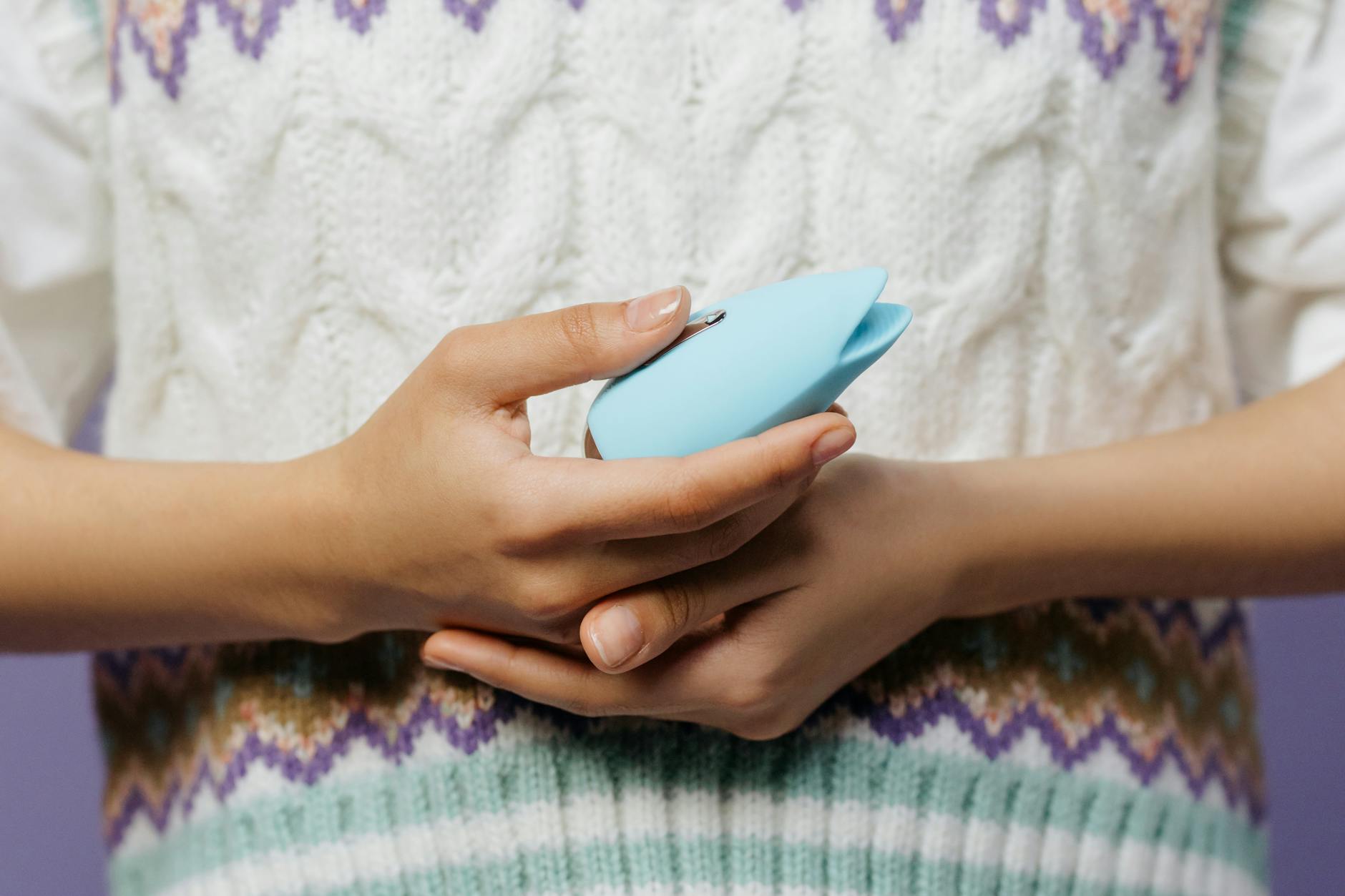
Photo by cottonbro studio on Pexels
Practical setup that actually works
Position matters more than you'd think. If numbness is worse in certain positions, it's often because you're in a position where your partner's weight or movement dominates the sensation landscape. Switching to positions where you have more control (like you on top) gives you the space to feel your own cues while the vibrator does its work.
Timing also matters. Some couples find that using the vibrator early in foreplay, when sensation is fresh and the nervous system hasn't shifted into performance mode yet, works better. Others prefer to introduce it mid-session, when things are already warm and both people are more relaxed.
The most important thing is consistent pressure and speed. The Lem's suction technology is designed to maintain steady, targeted stimulation in a way that builds sensation reliably. Many partners actually notice that when you're using a device like this, you become more responsive to them as well. Your presence increases because your nervous system isn't working overtime trying to feel something.
When numbness means something bigger
If numbness persists even with intentional use of a lemon vibrator, with open communication, and with adjustments to position and timing, that's worth exploring with a therapist. Sometimes numbness is pointing to relationship dynamics that need attention. Sometimes it's pointing to trauma or anxiety that needs professional support. Sometimes it's just a sign that you and your partner need to spend time reconnecting outside of the bedroom first.
The vibrator is a brilliant tool for reconnection. It's not a substitute for the harder work of actually talking to your partner about what's happening. But it can be a gateway. It can be the thing that helps you feel something again, which then gives you permission to ask for what you actually need.
People also ask
Is it normal to feel numb during partnered sex? Completely normal. Numbness during partnered sex affects people across all relationship types and lengths. It usually points to either performance anxiety, emotional distance, or being out of sync with your own sensation cues. Using lemon vibrators can help reactivate those cues.
Will using a vibrator with my partner make me dependent on it? No. In fact, the opposite often happens. When you use a vibrator intentionally to reconnect, you're teaching your nervous system that pleasure is possible in this context. Over time, many people find they need less vibration, not more, because the underlying numbness has resolved.
How do I bring up using a lemon vibrator if my partner might feel insecure? Lead with what you want to feel, not what you're missing. "I want to stay more present during sex and feel more connected" is an invitation. Frame the vibrator as something that helps you be more there with them, not more there without them. Most partners respond well to honest conversation about pleasure.
Can numbness during partnered sex mean we're incompatible? Not necessarily. Numbness is usually a symptom of something fixable: nervous system state, communication patterns, or physical positioning. It's worth exploring before assuming incompatibility. When you feel insecure about your body during intimacy, numbness can show up too, which is why this work matters.
Should I use a vibrator every time, or just when I need it? There's no rule. Some people use lemon vibrators intentionally during partnered sex most of the time. Others use them situationally, when they notice numbness creeping in. Both approaches are fine. Pay attention to what helps you stay present.
What if the numbness comes back? It might. Especially if there's underlying relationship stress or if you're going through a major life transition. That doesn't mean the vibrator isn't working. It means your nervous system needs reregulation again. The good news is that you now know what helps.
The real fix is presence
Lemon vibrators are a tool. They're a genuinely useful one, especially for reconnecting sensation when numbness has set in. But the actual fix for numbness during partnered sex is presence. Your partner's presence with you. Your presence with yourself. And your nervous system's willingness to feel safe enough to receive pleasure alongside another person.
If you're experiencing persistent numbness, especially if it's affecting your relationship, talking to a therapist can help you untangle what's underneath. Sometimes it's simple (you need a position change). Sometimes it's more complex (you need to rebuild trust). Either way, using a lemon vibrator intentionally can be part of the solution. It gives your body a way back to sensation, which is often the first step toward reconnection.