
Here's the thing that nobody says out loud
You can have an orgasm alone in sixty seconds. But the moment your partner walks into the room, your brain stops cooperating. Your body tenses. The sensation that felt so obvious five minutes ago suddenly becomes impossible to locate. And then comes the guilt spiral: "What's wrong with me? Why can't I just... do this?"
Nothing is wrong with you. This is one of the most common friction points in long-term partnerships, and it's almost never about the vibrator, the technique, or your capacity for pleasure. It's about the nervous system being in the wrong state.
Why your body behaves differently with a partner watching
Your parasympathetic nervous system (the one that handles arousal, relaxation, and yes, orgasm) doesn't care about logic. It cares about feeling safe. When a partner is present, even one who loves you and wants you to feel good, your brain activates what neuroscientists call "performance monitoring." You're no longer exploring sensation. You're evaluating how you look, whether it's taking too long, whether your partner is getting bored, whether this will "work."
That activation hijacks the neural pathways you need for arousal. You're literally running two competing processes at once: the pleasure-seeking part of your brain and the evaluation-watching part. The evaluation part always wins because it's tied to safety.
Add this layer: if you've spent years faking it or feeling disconnected during sex, your nervous system has learned that partnered sex equals performance, not pleasure. Your body doesn't trust that this time will be different.
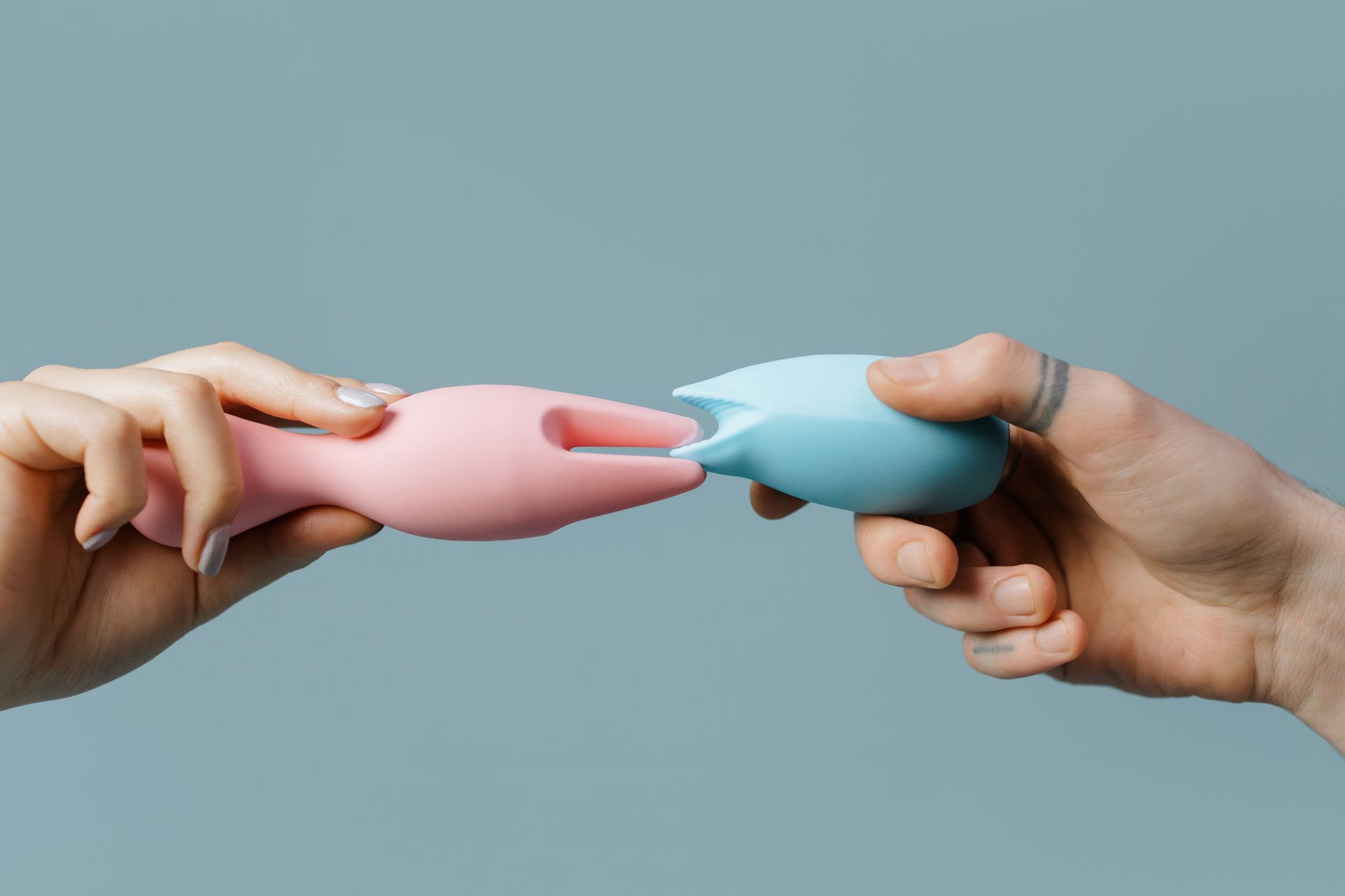
Photo by cottonbro studio on Pexels
The role of clitoral vibrators in rewiring the partnership dynamic
Lemon vibrators serve a specific purpose in this context: they're a permission slip. Not because you need permission from your partner (you don't), but because introducing a vibrator into partnered sex creates a subtle psychological shift. It moves the focus away from "Can I orgasm for you?" and toward "Can we explore sensation together?"
When you use a clitoral vibrator like the Lem with a partner present, you're accomplishing several things at once. First, you're removing the pressure that your body is the sole instrument of pleasure. Second, you're giving yourself explicit permission to prioritize your own sensation. Third, you're making it clear that your orgasm is a collaboration, not a performance test.
The difference between vibration and sensation without a tool is that vibration bypasses some of the evaluation loop. Your nervous system recognizes the pattern as different from partnered touch, which signals to your brain: "This is something new. Let's observe." That microsecond of novelty is enough to interrupt the performance-monitoring cycle.
Setting the stage before introducing the vibrator
Don't just pull out a lemon clitoral vibrator mid-session and hope for the best. That's still performance pressure, just with props. Instead, have the conversation outside the bedroom first.
Tell your partner: "I want to try using a vibrator when we're together. Not because anything's wrong, but because I know I relax better with it, and I want to explore that with you. I'm not doing this for you. I'm doing this for me, and I want you there."
That framing matters. You're not solving a problem. You're inviting them into a new experience.
Then. Agree on timing. Don't introduce the vibrator into a quickie or when you're already feeling pressured about duration. Pick a time when you both have space to be present without urgency. A weekend morning. An afternoon where your schedules are clear. Somewhere neither of you is tired or distracted.
How to actually use lemon sexual toys in partnered moments
Start with the vibrator in your hands, not your partner's. You set the pace, the intensity, the rhythm. Your partner's role initially is to be present, to touch other parts of your body, maybe to talk to you, but not to control the sensation.
This is critical: using a clitoral vibrator in a partnership isn't about your partner learning to do something new. It's about you learning to be present with pleasure while another person is in the room.
Begin at a lower intensity setting. If you're using the Lem, start at pattern 1 or 2. Your nervous system is already heightened from the newness of the situation. You don't need maximum stimulation right away. You need to feel safe and in control.
Take longer than you think you need to. Solo, you might get to orgasm in five minutes. With your partner present using a vibrator, budget fifteen to twenty minutes. Your parasympathetic nervous system is being asked to engage in a new context. That takes time. There's no prize for speed.
If you don't reach orgasm, that's not failure. Stop, breathe, and debrief with your partner. "I felt good but my brain got in the way" is valuable information. It tells you both something about how your nervous system works. It's not a referendum on your desirability or your partner's competence.
Building toward collaborative touch gradually
Once you've used the vibrator solo in your partner's presence a few times, you might ask them to hold it. Or to touch you elsewhere while you hold it. Or to guide it with you, hand over hand.
Each of these steps rewires the partnership dynamic slightly. You're showing your partner that you can be vulnerable and present at the same time. You're teaching them what your pleasure looks like when you're not anxious. That shared knowledge becomes the foundation for better partnered sex overall.
Honestly, some people discover that they prefer using a lemon vibrator even after they've gotten comfortable with a partner present. That's fine too. It doesn't mean you're broken or distant. It means your nervous system responds better to a particular type of stimulation, and that's worth honoring.
What often shifts after a few rounds of this
Here's what I've seen happen repeatedly: after three or four times using a clitoral vibrator with a partner present, the nervous system stops treating it as "performing." The novelty wears off. You start to separate the sensation of the vibrator from the fear of being watched. Your body realizes that you can be present and safe at the same time.
Some people find that they then want to explore without the vibrator. Others find that they want to keep using it, and that becomes part of their regular partnered pleasure routine. Both outcomes are correct. The goal isn't to graduate away from tools. The goal is to have access to pleasure without the performance tax.
If you're healing from pelvic floor dysfunction, a vibrator with a partner can actually be gentler than penetrative sex and still feel deeply connecting. If you're navigating mismatched sexual desire, a vibrator lets you stay connected without forcing your partner's arousal timeline to match yours.
Managing the internal narrative while your partner is present
The hardest part isn't usually the physical sensation. It's the voice in your head saying: "This is taking too long. My partner is bored. I'm failing." That voice is learned. And learned voices can be unlearned.
One technique that helps: before your partner enters the room, spend a few minutes using the vibrator alone. Remind your nervous system what pleasure feels like. Build a baseline of sensation. Then invite your partner in. You're not starting from zero. You're starting from a place where your body already knows the sensation is possible.
Another: agree with your partner beforehand that you'll use a simple signal if you need to pause or restart. Not because something's wrong, but because your nervous system needs a reset. My clients often use "slow down" or "give me a second." The signal tells both of you that you're still in control.
It's also worth checking in with your partner about their own nervous system. Sometimes partners feel pressure too. "Am I doing this right? Is she enjoying this? Should I be doing something else?" A brief check-in before and after takes the guesswork out. "I want you to just be present" is permission for them too.
When to involve a professional
If you've tried using lemon clitoral vibrators with your partner present several times and you're still stuck in the performance loop, or if orgasm has disappeared entirely in partnered contexts, a relationship therapist or sex therapist who understands nervous system regulation can help. This isn't a vibrator problem. It's a nervous system patterning issue, and those respond well to professional support.
Similarly, if difficulty reaching orgasm with your partner correlates with orgasms not feeling the same after hormonal changes, there might be a physiological layer worth exploring separately.
The actual long game
Your pleasure with a partner present isn't a puzzle to solve. It's a nervous system pattern to gently interrupt. Lemon sexual toys are one tool for doing that interruption. But the real shift happens when you decide that your pleasure matters enough to slow down, experiment, and rebuild trust in your own body. Your partner being present for that process isn't pressure. It's invitation.
People also ask
Why can I orgasm alone but not with my partner?
Your parasympathetic nervous system (which controls arousal and orgasm) is being overridden by performance monitoring when someone else is present. Your brain is evaluating how you look, how long it's taking, and whether your partner is bored instead of focusing on sensation. This is neurological, not a reflection of your capacity or your partner's competence.
Should I use a clitoral vibrator every time I'm intimate with my partner?
No. The goal is to use vibrators to interrupt the performance pattern, then gradually build confidence so you have options. Some people discover they love using a vibrator every time. Others find that after a few partnered experiences with the vibrator, they feel more comfortable without it. Both are success.
How do I talk to my partner about wanting to use lemon vibrators if they seem uncomfortable?
Start by separating your pleasure from their ego. Say something like: "I want to explore what feels good for my body, and I want you to be part of that." Don't frame it as a problem with them or something they're doing wrong. Frame it as something you want to discover together. If they remain uncomfortable, that's worth discussing with a therapist, because that discomfort often points to their own insecurity or messaging they received about sexuality.
Can using a vibrator make me dependent on it for orgasm?
No. This is a common myth. Your nervous system learns that the vibrator helps you relax, which is useful information. But you can absolutely orgasm without it. The vibrator is a tool for managing performance anxiety, not a crutch that rewires your capacity for pleasure.
What if I still can't orgasm even with the vibrator and my partner present?
It might take more time than you think. If you've tried it three or four times over several weeks and you're still stuck, talk to a therapist or sex therapist. The barrier might be psychological (old messages about your body, trauma, shame) rather than physical. A professional can help you locate what your nervous system is actually protecting you from.
Is it normal to feel guilty about needing a vibrator for partnered sex?
Absolutely normal. You've probably internalized the message that "real" sex is penetration without tools, and that if you need help, something's wrong with you. That's false. Your body has a specific nervous system, and tools that help you access pleasure are not crutches. They're reasonable adjustments. Your pleasure deserves support.