Let's talk about the real friction
You want to explore lemon vibrators. Your partner doesn't. Not "not yet." Not "maybe later." They've made it clear: they're not interested in sex toys, period. Now you're stuck between two things that feel mutually exclusive: honoring your own curiosity and protecting the relationship.
Here's what most people get wrong about this situation. They assume it's either/or. Either you abandon the idea and resent your partner quietly, or you push forward and they feel replaced, inadequate, or pushed away. Both endings are real outcomes I see in my therapy practice. Neither one has to be yours.
The truth is messier and more workable than that.
Why partners resist, and why it matters
Before you do anything, you need to understand what's actually happening on their end. Partner resistance to toys almost never comes from nowhere, and it's almost never about the toy itself.
Common reasons include: they feel threatened (toys feel like competition for their adequacy), they have shame or discomfort around sexuality they haven't processed, they're worried about being "not enough," or they've internalized some narrative that wanting toys means something is wrong with you or them.
Some partners worry that introducing toys will change sex permanently. Others grew up with messaging that sex toys are "cheating" or that wanting them means you're unsatisfied. A few are just genuinely uncomfortable with the idea and haven't had space to examine why.
None of these reasons mean you have to give up your own pleasure. But understanding the actual reason behind the "no" is what makes the next conversation possible.
The conversation you need to have first
This is not a negotiation or a sales pitch. It's an information-gathering conversation.
Pick a time outside the bedroom, outside a sexual moment, when you're both calm and not rushed. Start by saying something like: "I've been thinking about trying a lemon vibrator, and I want to understand what's making you hesitant. Not to change your mind, but so I understand what's actually going on."
Then listen. Don't defend. Don't convince. Don't list the benefits of lemon vibrators or clitoral stimulation. Just listen for the actual fear or belief underneath the "no."
If they say "I feel like you wouldn't need me," you've found the real issue. It's not about the toy. It's about feeling essential. That's a different conversation than if they say "I was taught that's dirty," which is a shame conversation.
Different root cause. Different path forward.
Three realistic scenarios and how to move through them
Scenario 1: They're worried about feeling inadequate.
This is the most common one I see. They interpret your interest in a lemon vibrator as "he/she/they can't satisfy me." Here, you need to separate pleasure from partnership.
Try this: "A vibrator isn't about you. Clitoral vibrators like the Lem work because of how the nerves are wired. It's not better than you. It's different. I can want both." Concrete, not emotional. Evidence, not reassurance.
If they're still stuck, here's the harder truth you might need to say: "I need you to trust that I know what I want. If I felt unsatisfied, I'd tell you. This isn't about your fault. This is about my body and what makes it feel good."
That boundary is important. You're not asking permission. You're informing them of your choice while staying open to how you both move forward together.
Scenario 2: They have genuine shame or discomfort.
They grew up being told sex toys are wrong, or sex is only for procreation, or wanting extra stimulation is greedy. This is deeper, and it usually can't be fixed by one conversation.
What you can do: offer to explore the discomfort separately from your choice. "I'm going to use a lemon vibrator for myself. That doesn't mean you have to participate or watch or even know when I'm doing it. But I'm hoping over time you'll feel differently about it. If you want to talk to someone about where that discomfort comes from, I'm here to support that." Clear, compassionate, non-negotiable.
Scenario 3: They're genuinely uncomfortable and unlikely to change.
Some partners will never be comfortable with toys. Full stop. And that's their right. You can't force acceptance.
What you can control: your own choices. You can use lemon vibrators alone, during solo sessions, in privacy. You can choose not to announce it or build it into couple sex. You're not sneaking. You're compartmentalizing. There's a difference.
The hard part: can you live with a partner who won't go there with you? That's a question only you can answer. But it's worth asking honestly now, not harboring resentment for five years.
How to actually use lemon vibrators in your specific situation
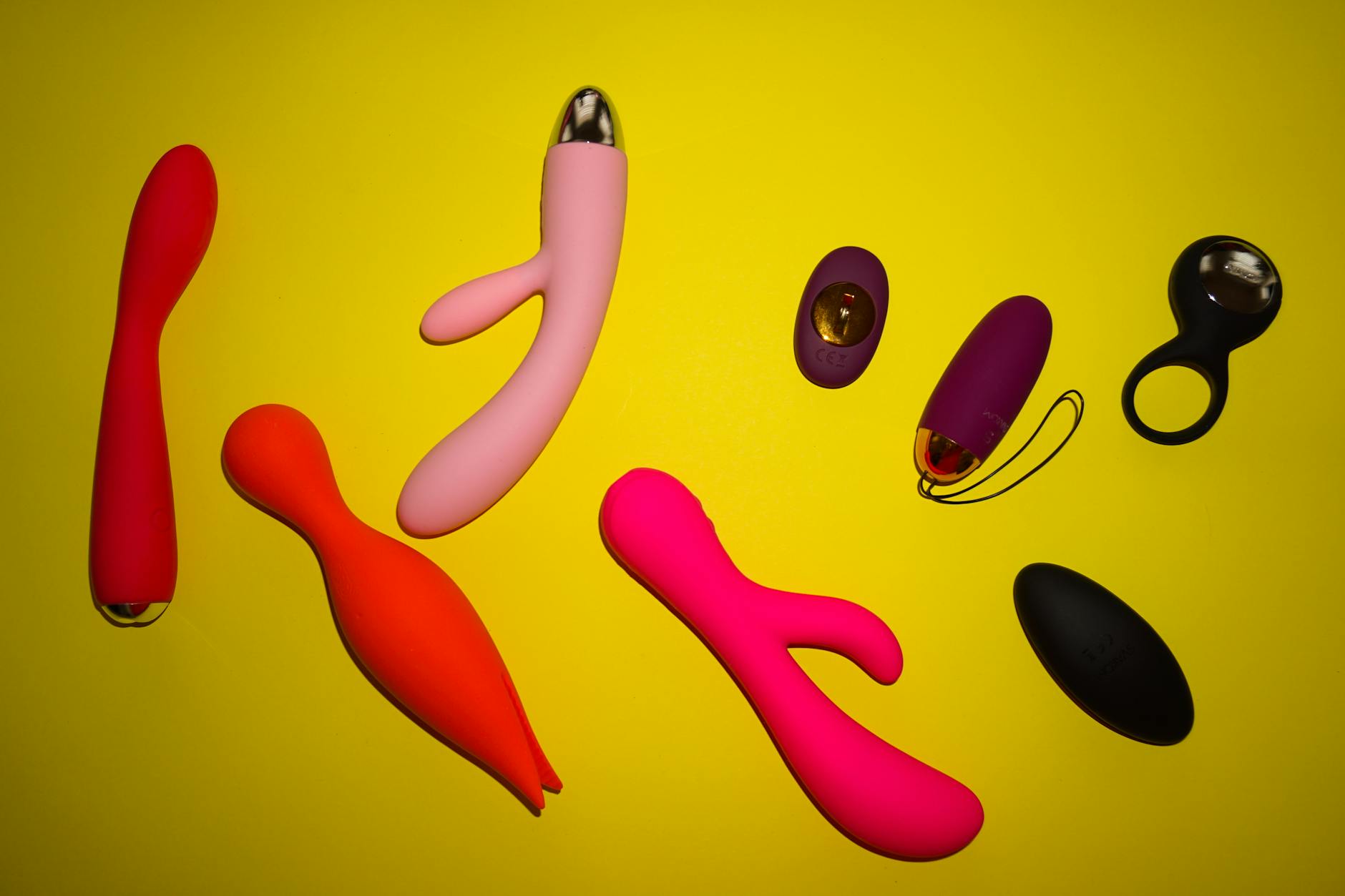
Photo by FounderTips. on Pexels
Once you've had the real conversation, the logistics depend on what you agreed to.
If your partner is open but cautious, start small. You're not introducing the toy during sex immediately. You're exploring it alone first. Understand how a lemon clitoral vibrator feels on your body, what settings work for you, what speeds and patterns deliver what sensations. When you know that, bringing it into couple sex feels less mysterious and threatening.
If they're willing to watch or be in the room, frame it as foreplay or as part of your sexual experience together. "I'm going to use this to help me get aroused" is different from "I need this instead of you." The first is additive. The second is replacement. Language matters.
If they're not willing but you're going ahead anyway, privacy is your friend. Solo sessions don't require their consent or presence. You get to have your own pleasure entirely separate from couple sex.
Here's what I tell couples in my practice: desire gaps around toys are real, but they're not usually about the toy. They're about feeling seen, feeling adequate, feeling trusted. If you can address the actual anxiety underneath the "no," the rest often resolves itself.
The boundary that protects both of you
Whatever you decide, be clear: you respect their discomfort, but you don't accept guilt for your own pleasure. Those are not the same thing.
"I hear that you're not comfortable with this. I'm not asking you to be. I am asking you not to shame me for wanting it." That's the line. On one side: their feelings. On the other: your autonomy. Both are real. Both matter.
Your partner's discomfort about lemon vibrators is not your job to fix. Your job is to respect it, set boundaries around it, and keep exploring what you need.
When to get help
If this conversation becomes a proxy for bigger relationship issues—control, shame, power imbalances—that's when couples therapy becomes valuable. A skilled therapist can help you both understand what's underneath the resistance without framing one of you as "the problem."
If you're considering using a lemon vibrator against your partner's explicit wishes in ways that feel deceptive, that's also a sign the relationship needs attention beyond the toy.
But for most couples? The conversation plus some time and patience is enough. You want something. They're uncertain. You set a boundary. You move forward. Their discomfort doesn't have to become your limitation.
FAQs
How do I introduce the idea without making my partner feel inadequate?
Frame it around your own body and curiosity, not their performance. "I've been reading about how clitoral vibrators work, and I want to try one for myself" shifts the focus from "you're not satisfying me" to "I'm curious about my own pleasure." Then listen to what surfaces without defending your choice.
What if my partner says they'll feel replaced if I use a vibrator?
That fear is usually rooted in something real for them, often a past experience or belief about sexuality. You can validate the feeling without accepting the guilt. "I understand why you feel that way. That's not what this is about for me. A toy and a partner do completely different things." Then give them time. Sometimes partners come around once they see it's not about replacement.
Is it okay to use a lemon vibrator alone if my partner doesn't want toys in the relationship?
Yes, absolutely. Solo pleasure is entirely yours. You're not betraying anyone by exploring your own body in private. The resistance is often specifically about couple sex, and that's worth distinguishing. Ask if the issue is "no toys ever" or "no toys between us."
How long should I wait for my partner to come around before I just go ahead?
That depends on your relationship and what you've both agreed to. If you've had an honest conversation and they've said "I'm uncomfortable but you can do you," waiting isn't required. If they've said "I'd feel betrayed," that's different. You get to make your choice, but you're also choosing the potential consequences. Be clear about what those are.
Can using a lemon vibrator together help bridge the gap?
Sometimes yes, sometimes no. If your partner is willing to try, starting with them watching you might feel less threatening than jumping straight to partnered use. But if they're not ready, pushing for it will only harden their resistance. Let willingness come first.
What if we can't reach common ground on this?
Then you both have to decide what you're willing to live with. Can you be in a relationship where your partner doesn't support this part of your sexuality? Can they be in a relationship where you pursue it anyway? Those are separate, honest questions, and sometimes the answer is no for one or both of you. That's not failure. That's clarity.
The actual path forward
Your partner's resistance and your desire don't have to destroy each other. What they require is honesty from both sides, real conversation, and clarity about boundaries. No resentment, no sneaking, no shaming.
You get to want a lemon clitoral vibrator. They get to feel uncertain about it. You both get to figure out if those two things can coexist in your relationship. Usually, they can. Sometimes, they can't. But you won't know until you stop trying to convince each other and start trying to understand.
If you're looking for more on how to navigate pleasure conversations with partners, we have a guide on how to talk about lemon vibrators with your partner when desire levels differ. And if you're feeling stuck in a broader desire gap, how lemon vibrators help with low libido and desire gaps might offer some perspective.
Your pleasure matters. So does your relationship. They're not mutually exclusive. But they require honesty.