Let's start with the obvious problem
Direct vibration on your clitoris can feel like you're holding a jackhammer against a raw nerve. Not good. Not the goal. The assumption that "more intensity equals more pleasure" breaks down fast when your anatomy is screaming to turn it off.
Here's what's actually happening. Your clitoris has roughly 8,000 nerve endings concentrated in a space smaller than a pea. When stimulation is too direct, too buzzy, or too relentless, those nerves get overwhelmed instead of activated. Pleasure flips into discomfort in seconds. You're not broken, and you're not alone. The mechanism you're dealing with is real and fixable.
Why standard vibrators can feel unbearable
Most vibrators use rapid oscillation. This is direct mechanical stimulation applied straight to tissue. If your clitoris is sensitive, recently healed, prone to numbness, or just wired for gentler input, oscillation can feel abrasive.
There's also the problem of desensitization. Persistent direct vibration can numb sensation over time because the nerves get fatigued. You find yourself chasing higher intensity, getting less feeling, and feeling more frustrated. It's a dead end.
Then there's positioning. Standard vibrators require sustained pressure in one spot. This concentrates all the stimulation in a tiny area. Over minutes, that intensity feels concentrated and sharp rather than diffuse and pleasurable.
How suction-based lemon vibrators change the game
Suction works differently. Instead of vibrating directly against tissue, it creates a gentle rhythmic pulse that draws the clitoris into a soft chamber. The stimulation is indirect, diffuse, and builds sensation layer by layer rather than overwhelming it all at once.
Think of it like the difference between a jackhammer and a massage. One is relentless percussion. The other is pressure and release, pattern and rhythm. Your nervous system reads them as completely different experiences.
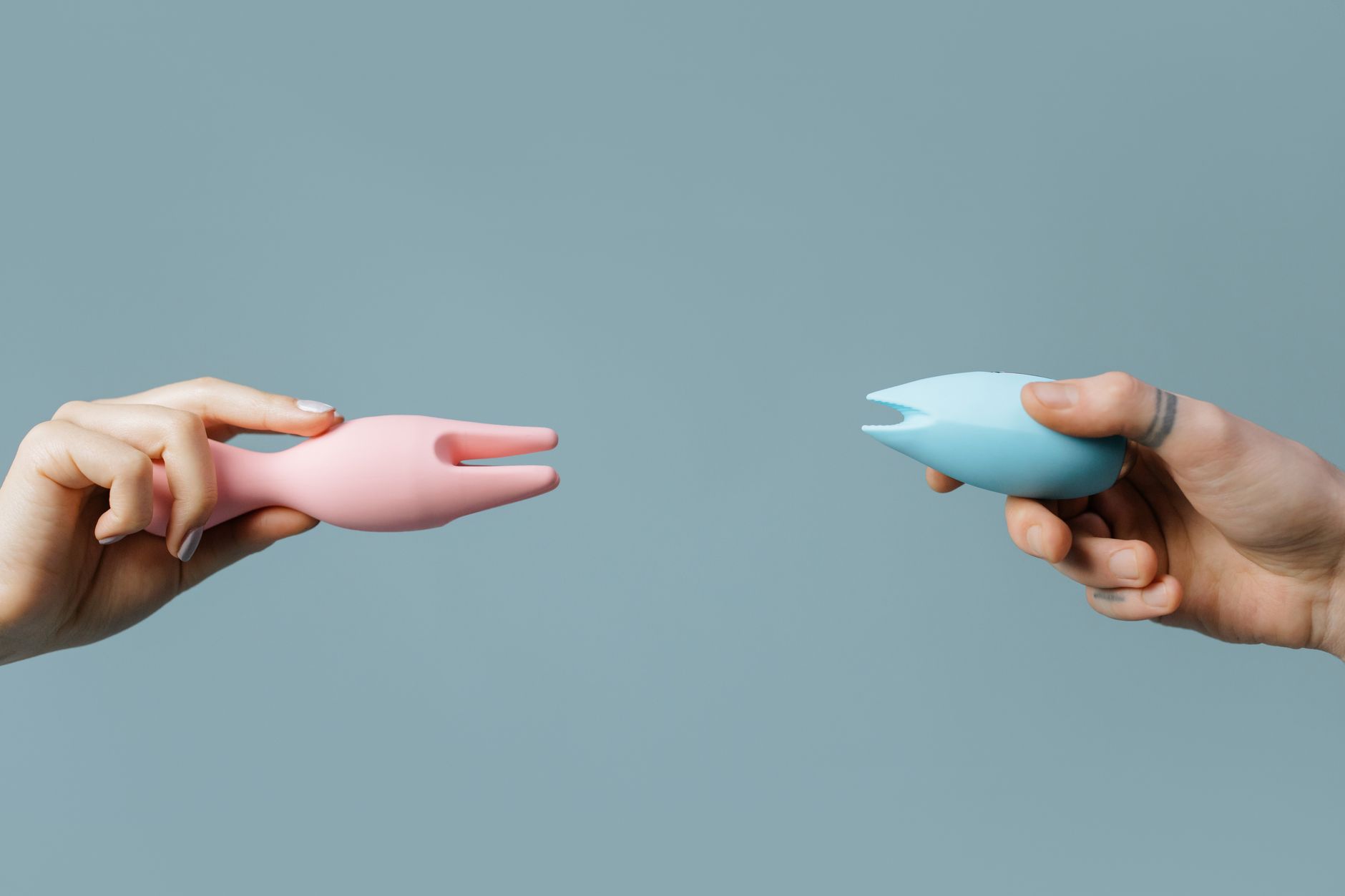
Lemon vibrators like the Lem are designed around this suction principle. They use gentle air-pulse technology that mimics the sensation of oral sex without teeth, pressure, or the need for a partner to be involved. For people who find direct vibration painful, this is often the entry point to actually enjoying stimulation.
The mechanism is also forgiving. Because suction doesn't involve direct contact, you can experiment with intensity levels without worrying about creating pain or numbness. You're not fighting against sensitivity. You're working with it.
The intensity levels that actually work
If you've been avoiding toys because vibration hurts, start with pattern 1 or 2 on a suction device. Seriously. These aren't lazy settings. They're the baseline.
Spend 5 to 10 minutes at pattern 1. Notice what that feels like. Does it build sensation? Does your clitoris respond with engorgement and increased receptivity? Great. Stay there. There is zero shame in finding your pleasure at a lower intensity setting. Your neurological preferences are not a failure.
Once you've explored pattern 1 and 2 fully, try moving to pattern 3. Still gentle. Still diffuse. The jump in intensity is subtle, and your body will tell you if it's right.
Many people who thought they couldn't enjoy toys at all find their preferred range sits between patterns 2 and 4. They'd been trying regular vibrators that started at the equivalent of a 7 or 8. No wonder it hurt.
Positioning to avoid overstimulation
With suction toys, you don't need direct contact between the suction cup and your clitoris. In fact, direct contact is often too much.
Instead, position the cup so it's over the entire vulva. Some suction should be pulling the external tissue, but the intensity is distributed across a wider area. This lets sensation build without overwhelming any single nerve cluster.
You can also angle the device. Slight off-center positioning spreads the stimulation. Many people find that angling the cup toward the upper portion of the vulva (where the clitoral body extends beneath the skin) provides intense sensation that doesn't feel sharp or painful.
This also helps with the numbness problem. Distributed stimulation over the whole clitoral structure keeps nerves responsive longer. You're not fatiguing a single point. You're activating the whole system.
Building tolerance without forcing it
If your clitoris is oversensitive right now, whether from recent healing, medication changes, hormonal shifts, or just inherited neurology, gradual exposure works.
Start with a suction toy once or twice a week. Spend 10 to 15 minutes exploring sensation at low intensity. Your nervous system adapts. The receptors get used to gentle input. Over weeks, your tolerance often shifts. What felt intolerable becomes manageable. What was manageable becomes pleasurable.
Don't push intensity. The impulse is to "train" yourself by going harder or longer. That's counterintuitive. What actually works is consistent, gentle, patient exposure. Your clitoris isn't a muscle. It doesn't respond to "no pain, no gain" logic.
If you're also dealing with how to use lemon vibrators when recovering from pelvic floor dysfunction, this principle applies doubly. Slow and steady wins.
Lubrication and preparation matter more than you think
Your clitoris is more sensitive when tissue is dry. Water-based lubricant creates a buffer that disperses stimulation more evenly and makes the suction feel less sharp.
Apply lube to the outside of the suction cup, not just your body. This creates a seal that actually reduces direct pressure while maintaining the suction effect. Counterintuitive but effective.
Warm-up also matters. Spend time on other forms of touch first. Kissing, gentle touching, or even just thinking about something arousing for a few minutes shifts your nervous system from fight-or-flight into receptivity. Blood flows to your clitoris. Tissue becomes more resilient. Nerve endings become more responsive. By the time you introduce the toy, your body is primed to receive pleasure rather than perceive threat.
The difference between overstimulation and just-right sensation
Overstimulation feels sharp, burning, numb, or irritated. It doesn't build. It doesn't shift into pleasure. It just gets worse the longer you continue.
Right-level sensation feels like pressure, warmth, and building engagement. Your clitoris engorges. You feel arousal spreading. Pleasure builds in waves rather than staying flat or intensifying into pain.
If you hit the overstimulation wall, stop immediately. There's no prize for pushing through. Step back from the toy. Let sensation settle for a few minutes. Then try again at a lower intensity or with different positioning.
Many people find that after overstimulation, it takes a few days for their clitoris to feel normal again. This is worth avoiding. Using toys strategically at the right intensity means you can play again tomorrow, not in a week.
Why partners sometimes don't understand this shift
If you're using lemon vibrators with a partner, you might encounter some confusion. The shift from "just use your hands harder" to "actually, this suction device at pattern 2 is perfect" can feel like a step backward to someone who doesn't understand the mechanism.
It helps to frame it clearly. You're not avoiding intensity. You're choosing a type of intensity that actually works for your body. It's like the difference between someone preferring wine over beer. Not less, just different. And better for your specific wiring.
You might also show your partner how the device feels. Some people find it helpful to let their partner hold it so they understand the control, the positioning, and the effect. How to use lemon vibrators with a partner who has never tried toys before covers this more fully, but the short version is: communication and shared exploration dissolve most resistance.
When oversensitivity points to something else
If your clitoris is persistently painful or oversensitive even with the gentlest approach, it's worth mentioning to a gynecologist. Conditions like vulvodynia, neuropathy, or irritant dermatitis can make any touch feel intolerable.
These are treatable. A specialist can rule out physical causes and, if needed, refer you to pelvic floor therapy or other interventions that genuinely help. Sometimes the issue isn't the toy. It's something your body is signaling that needs attention.
Don't assume you're broken. Do assume your body is telling you something useful.
What actually works
Here's what I see consistently: people who thought toys would never work for them find that suction-based lemon vibrators change everything. Not because suction is a magic bullet, but because it's a fundamentally different mechanism than the vibration they'd already written off as painful.
Start at pattern 1. Use lube. Build arousal first. Position for diffuse rather than concentrated stimulation. Give your body weeks of gentle exposure. Notice what shifts.
Intensity is not a fixed number. It's a conversation between your nervous system and the right tool. Find the conversation, and pleasure becomes possible again.
People also ask
Can I use a regular vibrator if I reduce the intensity?
Maybe, but probably not long-term. Most vibrators have a minimum intensity that's still fairly buzzy because of how the motor works. You might find pattern 1 tolerable, but it often still causes numbness over time. Suction-based toys are designed from the ground up for gentleness, so the lowest setting is actually gentle rather than just "less intense than the highest setting."
How do I know if I have genuine overstimulation versus just needing more arousal?
True overstimulation feels sharp, burning, or numb. You don't want to continue. Your instinct is to stop. If you're just not aroused yet, sensation feels flat or muted, but not painful. The fix for flatness is more foreplay and patience. The fix for pain is stopping and reassessing your approach.
Will using lemon vibrators at low intensity eventually let me enjoy higher intensity?
Not necessarily, and that's fine. Some people find that consistent low-intensity use gradually expands their capacity. Others discover that their body is simply wired for gentler stimulation, and that's their preference. Both are valid. Your goal is pleasure, not proving something to yourself.
Can sensitivity changes be hormonal?
Absolutely. Hormonal shifts from birth control changes, cycle phases, or perimenopause can make your clitoris more or less sensitive. This is temporary and normal. A suction toy works well here because you can adjust intensity day-to-day without switching toys entirely. How to use lemon vibrators when hormone levels shift unexpectedly dives deeper into this.
Is numbness from vibration permanent?
No. If you stop using direct vibration and switch to suction-based toys, sensation typically returns within days to a couple of weeks. Your nerves are resilient. They just need a break and a change of stimulation type.
What if suction feels uncomfortable too?
Try a lower setting on the suction device. You can also try very brief sessions, 2 to 3 minutes at pattern 1, to let your body get used to the sensation without overwhelm. If even the gentlest suction feels wrong, your clitoris might be dealing with inflammation or irritation. Consider seeing a gynecologist to rule out physical causes before assuming you can't enjoy toys at all.